Can Dogs Eat Broccoli? A Vet Neurologist's Take on Portions, Prep, and Who Should Skip It
Medically reviewed by Roger Clemmons, DVM, PhD, DACVIM (Neurology and Neurosurgery), CVA, CVFT — For general education — not a substitute for veterinary care.
Yes, dogs can eat broccoli — in small, cooked portions the real risk is gas and fiber overload.
On this page
- So, Can Dogs Eat Broccoli, or Is This a “Technically Yes” Situation?
- What Is It About Broccoli That Actually Gives Vets Pause?
- How Much Is Too Much, and Does the Stalk Change the Math?
- Raw or Cooked — Does Preparation Actually Change the Risk?
- Which Dogs Should Sit This One Out or Get an Extra-Small Portion?
- Where I Land: The Verdict on Broccoli in the Bowl
Picture a Tuesday dinner prep: a cutting board of broccoli crowns headed for a stir-fry, a dog stationed at the cook’s feet with the particular patience reserved for vegetables that might, just might, hit the floor. A floret drops. The dog eats it before anyone can react, and the question that follows — usually mid-chew, usually a little too late to matter — is whether that was fine or a mistake. This is a good scene to sit with, because it’s closer to how the question “can dogs eat broccoli” actually gets asked than any tidy feeding plan is. The honest answer sits in the middle: broccoli isn’t a toxin, but it isn’t a free pass either. It behaves less like a hazard to react to and more like a dose-and-preparation problem to manage, and that’s where I want to spend this whole piece.
So, Can Dogs Eat Broccoli, or Is This a “Technically Yes” Situation?
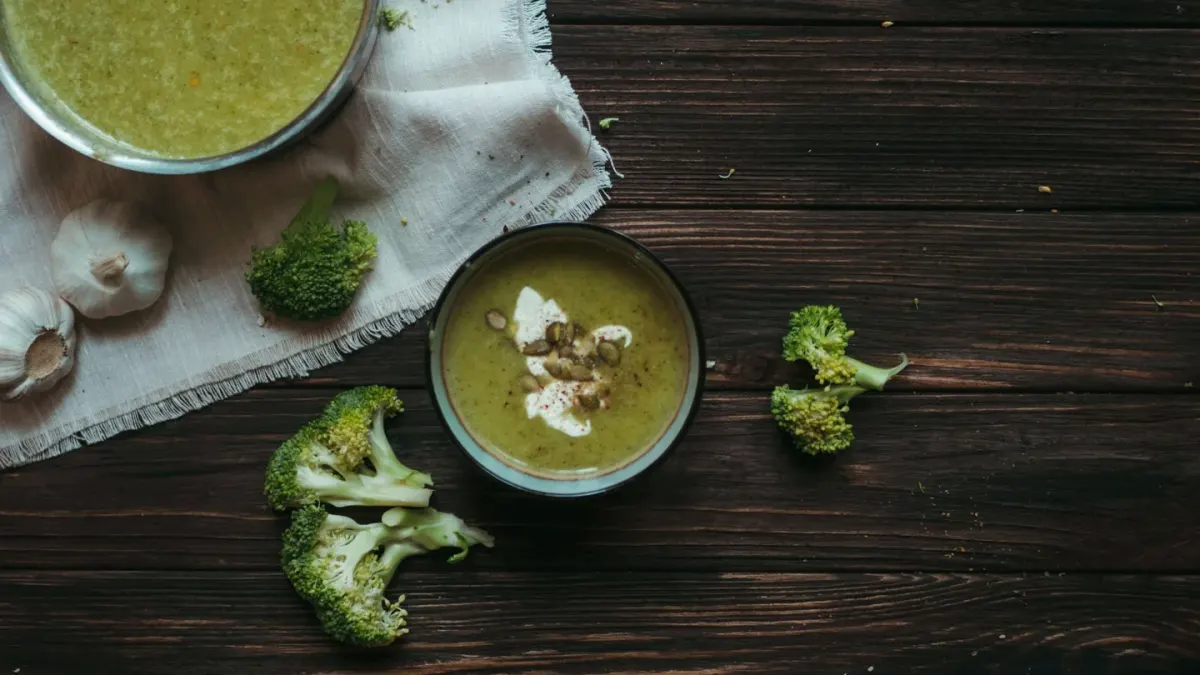
Plain, cooked broccoli — no butter, no oil, no garlic or onion seasoning — is safe for most healthy dogs in small amounts. Both the florets and the stalk are edible, though the stalk needs to be peeled and cut down smaller than seems reasonable, because a chunk that size is exactly what turns a snack into an emergency-room visit for a lodged piece of vegetable. Nothing about broccoli itself is a canine toxin the way onions or grapes are. The concern is volume and preparation, not the vegetable’s identity.
What Is It About Broccoli That Actually Gives Vets Pause?
Broccoli florets carry isothiocyanates, sulfur compounds that in large amounts are associated with gastric irritation across several species, plus a fair amount of insoluble fiber. Neither is dangerous in a bite-sized serving. Both matter once broccoli stops being an occasional topper and starts being a regular side dish, which is exactly why the fiber conversation deserves its own read — see Yes, You Can Give a Dog Too Much Fiber for where that line tends to sit.
This is also where I reach for the same two things I always reach for on a food-therapy question — the published literature and the food-energetics framework — and both point the same direction. In traditional food therapy, broccoli is generally classed as a cooling vegetable, useful in modest amounts but not the thing you pile onto a dog whose constitution already runs cold or depleted. In the peer-reviewed literature, the closest parallel comes from dogs whose digestive tracts are already compromised. A JAVMA review on exocrine pancreatic insufficiency notes that the condition “is treated by pancreatic enzyme replacement therapy, nutritional management (low-residue diets with moderate fat content), and supplementation of cobalamin,” and the same authors add that “future studies are needed to further understand the causes of persistent dysbiosis in animals with EPI following initiation of pancreatic enzyme replacement therapy” — evidence that a fragile gut needs a lower-residue diet, and that dysbiosis in that population is still not fully understood. Broccoli isn’t a treatment target in that research, but the underlying logic — go lower-residue when a gut is already working hard — is exactly why I’d rather under-serve broccoli to any dog with a shaky digestive history than treat it as a neutral vegetable.
How Much Is Too Much, and Does the Stalk Change the Math?
There’s no single official gram limit here, and I’d distrust anyone who hands you one with false precision. What holds up in practice: keep any vegetable treat, broccoli included, to a small fraction of the day’s calories, cut pieces well below what looks necessary, and skip raw stalk chunks entirely for dogs that gulp their food.
Consider a small terrier mix whose owner is trying to trim a few pounds before a checkup, swapping part of a meal for steamed vegetables to stretch the bowl without stretching the calories. Broccoli looks perfect for that job — low calorie, decent fiber, satisfying to chew. The tradeoff nobody mentions until the first loose stool: fiber that helps one dog feel fuller can overwhelm another dog’s gut in the same afternoon, especially if the swap happens all at once instead of over several days. That’s not a broccoli-specific failure. It’s what happens whenever a gut calibrated to one diet meets a sudden new fiber and compound load, and it’s the same principle behind the slow ramp recommended for a very different vegetable in Can Dogs Eat Sweet Potato? Gradual introduction, not just small quantity, is the real safety lever.
Raw or Cooked — Does Preparation Actually Change the Risk?
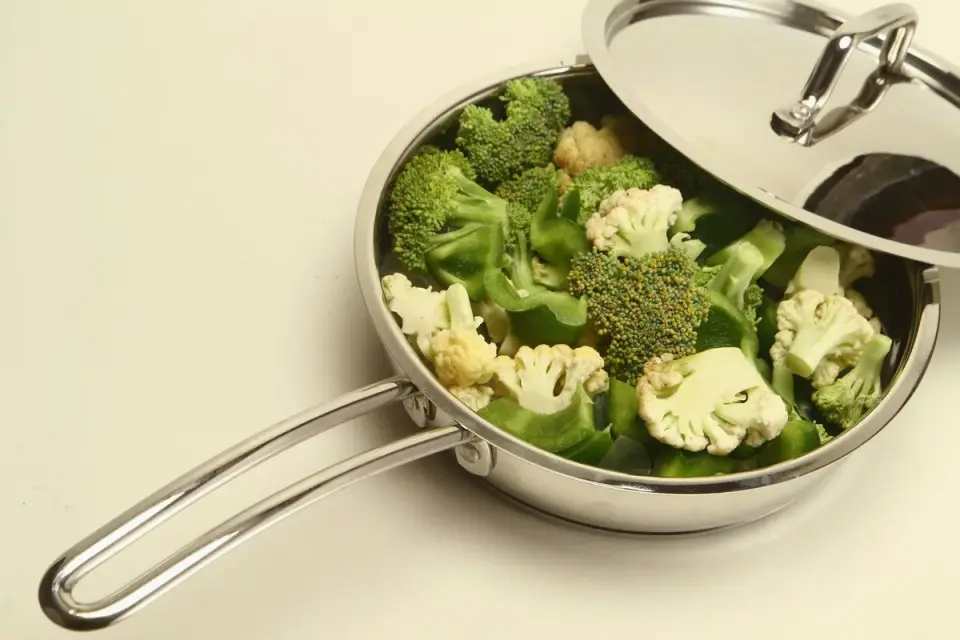
One counterargument comes up often enough that it deserves a direct answer: some owners argue raw broccoli preserves more sulforaphane, a compound getting attention in human antioxidant research, and that steaming wastes the point of feeding it at all. I take that seriously, and I still land on cooked. Whatever antioxidant edge raw florets carry is a human-nutrition argument imported into a dog’s bowl, not one built on canine dosing data, and it comes at a real, immediate cost: harder texture, slower digestion, and a rougher ride for a gut unaccustomed to raw cruciferous fiber. I’d rather trade a hypothetical antioxidant gain for a lower, more predictable GI bill. Steamed, plain, cooled to room temperature — that’s the version I’d put in front of almost any dog.
Which Dogs Should Sit This One Out or Get an Extra-Small Portion?
Dogs with diagnosed digestive disease — pancreatitis, inflammatory bowel disease, or the EPI population discussed above — do better skipping novel high-fiber vegetables or introducing them in genuinely tiny amounts under veterinary guidance. Dogs managing thyroid conditions are worth a conversation with their own vet before regular broccoli, given the compound’s goitrogenic reputation in other species. And dogs whose gut is already unsettled are a poor candidate for a big first serving of anything fibrous: a recent randomized trial in Frontiers in Veterinary Science on probiotic responders found that “diversity metrics did not distinguish non-responders from responders,” a reminder that gut resilience isn’t uniform or predictable across dogs, even ones that look healthy on paper. If your dog’s digestion needs steadier support before you start adding vegetables at all, Best Probiotic for Dogs is a reasonable next stop.
Where I Land: The Verdict on Broccoli in the Bowl
Broccoli earns a place in the bowl, in small, cooked, unseasoned portions, introduced slowly rather than dumped in all at once. It doesn’t earn a place as a daily side dish for a dog with a known digestive condition, and it doesn’t need to be raw to be worthwhile.
Here’s the practical version: cook a few florets plain, cut them smaller than you think you need to, offer a single test-sized portion, and watch the next day before it becomes a regular topper. If your dog already has a diagnosed digestive or thyroid condition, run the addition past your own vet first rather than guessing.
Frequently asked questions
Can dogs eat broccoli stalks, or just the florets?
Both can be fed, but the stalk is denser and harder, which raises the choking risk if it isn't peeled and cut small. Cooked florets, cut down further than seems necessary, are the easier place to start.
How much broccoli is too much for a dog?
There's no universal number, but the safest habit is to treat it like any vegetable topper — a small fraction of the day's calories, introduced gradually over a few days rather than a full serving at once.
Is raw broccoli worse for dogs than cooked?
Raw florets are harder to digest and more likely to cause gas or loose stool in a dog unused to them. Cooked, plain broccoli — no butter, oil, garlic, or onion — is the gentler option.
Sources
- Exocrine Pancreatic Insufficiency Management Review — JAVMA
- Probiotic Responder Diversity Study in Dogs (RCT) — Frontiers in Veterinary Science