Can Dogs Eat Strawberries? A Neurologist's Honest Read on Portion, Prep, and Who Should Skip Them
Medically reviewed by Roger Clemmons, DVM, PhD, DACVIM (Neurology and Neurosurgery), CVA, CVFT — For general education — not a substitute for veterinary care.
Yes, dogs can eat strawberries in moderation — fresh, plain, and cut small for safety.
On this page
A client brought her elderly beagle in for a neurology recheck last spring, and while we waited on her dog’s gait to settle enough for a proper exam, she mentioned she’d been slicing strawberries into his bowl all week because he’d gone off his kibble after a course of antibiotics. He was a round little dog with a soft midsection and a history of loose stools whenever his diet changed even slightly, and she wanted to know if the berries were helping or just another variable stacked on an already unsettled gut. I asked her to bring the container. Six strawberries a day for a fourteen-pound dog with GI sensitivity is not a garnish, it’s a meaningful slice of his daily intake, and that’s the kind of arithmetic I want an owner doing before the fruit becomes a habit rather than after.
What a Strawberry Actually Brings to the Bowl
Strawberries are, nutritionally, an unremarkable fruit that people tend to talk about like a supplement. One cup of raw strawberries carries roughly 3 grams of fiber and about 89 milligrams of vitamin C, most of a person’s daily value, according to USDA FoodData Central. Dogs synthesize their own vitamin C, so that number matters less to them than it does to us, and the fiber is genuinely useful only in the small amounts a treat portion provides. What the fruit also carries is natural sugar, and that’s the part that gets glossed over in the enthusiastic pet-blog version of this question. In food-therapy terms I sometimes note berries among the cooling, moistening foods, a distinction I weigh more for a dog already running loose or damp constitutionally than for one who’s dry and tight-coated, but that’s a texture I layer on top of the hard nutrition numbers, never a substitute for them.
The Math Before the Berry Hits the Bowl
According to the American Kennel Club, strawberries are safe for most dogs, and a reasonable starting point runs from a single berry for a small dog up to a small handful for a large one, with treats overall capped near 10% of daily calories. That guidance is sound as far as it goes, but I’d rather owners think in grams of sugar than in berry count, because a toy poodle and a mastiff hitting the same handful recommendation are not experiencing the same metabolic load. PetMD flags the same tradeoff: fresh strawberries are fine in moderation, but the sugar adds up fast in a small dog fed several a day, and it can tip a diabetic or overweight dog toward the exact problems that fruit is supposedly too wholesome to cause. This is where I part ways with the breezier feed-it-freely framing you’ll see on some pet blogs. A food doesn’t get a free pass because it’s unprocessed. It still has to clear the same caloric and metabolic bar as anything else that lands in the bowl, and for a dog carrying extra weight or an unstable blood sugar curve, that bar is lower than most owners assume.
That’s really the whole argument, reduced to one habit I never drop, whether I’m reading an MRI or holding an acupuncture needle over a stiff hind end: reach for both the imaging study and the acupuncture needle, the hard data and the whole-patient read, before I commit to a plan. A strawberry question deserves the same two-part discipline. The hard data is the sugar and fiber math above. The whole-patient read is the dog in front of you, their weight trend, their GI history, whether they’re already managing diabetes or pancreatitis. Skip either half and you’re guessing.
Prep That Turns a Treat Into a Hazard, or Doesn’t
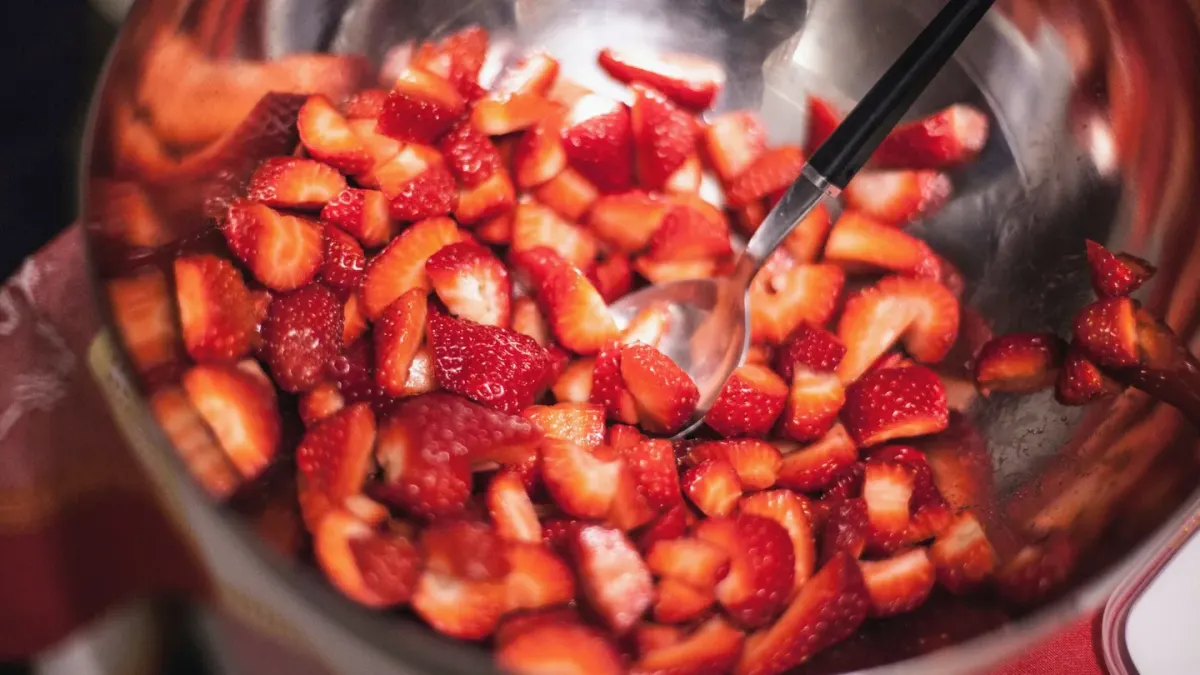
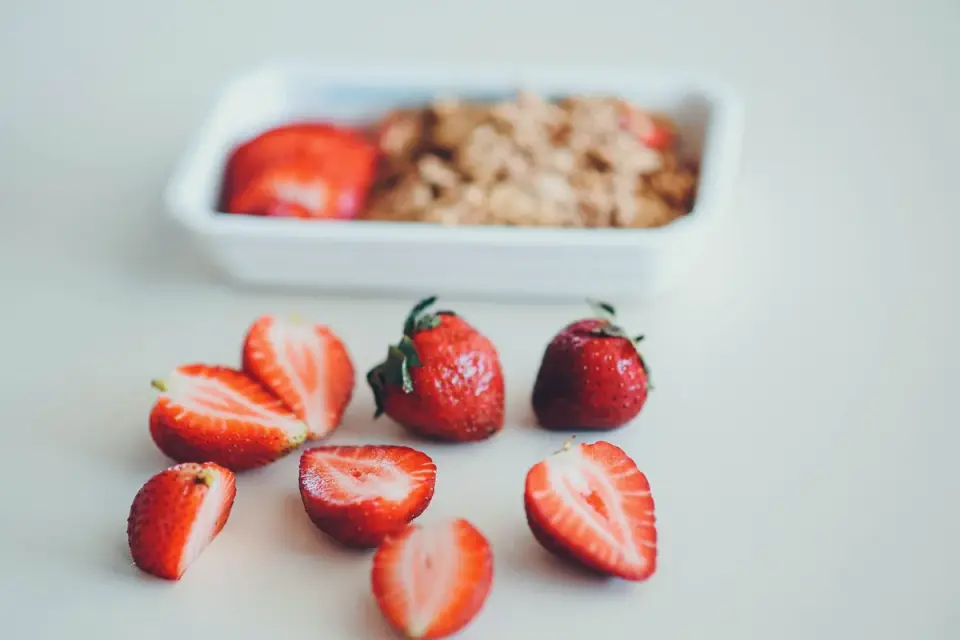
The berry itself is rarely the danger. What sends a strawberry treat sideways is almost always preparation or packaging. Fresh strawberries are naturally free of xylitol, but strawberry-flavored yogurt, jam, syrup, or freeze-dried snack mixes can carry it, and xylitol is a genuine emergency in dogs even at small doses, so any processed strawberry product needs its label checked before it goes anywhere near the bowl. Whole berries, especially with a small dog or an enthusiastic gulper, also pose a real choking and obstruction risk, which is why I have owners slice them into quarters or smaller before serving, remove the green cap, and skip canned or syrup-packed versions entirely. None of this is exotic advice. It’s the same read-the-label habit that should apply to a bag of kibble, just scaled down to a single piece of fruit.
Gut tolerance is where this gets individual, and it’s worth being precise about why. Dogs recovering from exocrine pancreatic insufficiency are typically managed with pancreatic enzyme replacement, a low-residue diet with moderate fat, and cobalamin supplementation, not with extra fruit fiber layered on top; as one review puts it, “EPI is treated by pancreatic enzyme replacement therapy, nutritional management (low-residue diets with moderate fat content), and supplementation of cobalamin” (JAVMA). That same review notes that “future studies are needed to further understand the causes of persistent dysbiosis in animals with EPI following initiation of pancreatic enzyme replacement therapy,” which is a fair reminder that we don’t fully understand every gut’s response to a dietary change, fruit included. Separately, a recent probiotic trial in dogs found that “diversity metrics did not distinguish non-responders from responders” (Frontiers in Veterinary Science), underscoring that gut response to any new input, a probiotic or a berry, is individual rather than predictable from a stool sample alone. That’s the scientific backbone behind the plain instruction to start small and watch the dog, not the fruit’s reputation.
If a dog’s stool loosens after a new food, fiber load is one of the first things I check, and it’s worth knowing where the line actually sits for your dog’s size and history; our guide on giving a dog too much fiber walks through that threshold in more detail. For dogs with a known sensitive gut, a look at probiotic options is often a more productive conversation with your vet than debating whether a few more berries are the culprit.
Who Should Check With a Vet First
A dog managing diabetes, a dog carrying extra weight, or a dog with a documented history of pancreatitis or chronic loose stool is exactly the population where I want a phone call before strawberries become a standing routine rather than an occasional treat. It’s a short list, but it’s not a rare one. If your dog already gets a fruit or vegetable rotation, our piece on sweet potato prep and portions covers similar ground on how a starchy or fibrous add-in should fit into a dog’s existing calorie budget.
Where I Land
My answer isn’t a flat yes or a hedge dressed up as caution. Fresh, plain strawberries, sliced small, in a portion sized to the dog in front of you, are a fine treat for the overwhelming majority of healthy dogs. The counterargument I take seriously is the sugar load in a small or metabolically compromised dog, and it’s a real one, not a technicality. It’s also answerable with math you can do before the berries ever leave the fridge: know the dog’s weight, know roughly how many calories a treat allowance allows, and size the portion to that number rather than to how many berries seem right by eye. Do that, and strawberries stay what they should be, an occasional bright note in a dog’s diet, not a variable you’re troubleshooting later. Next season, when the berries are cheap and everyone’s slicing them into bowls without a second thought, that’s the habit I’d want owners to carry into the kitchen.
Frequently asked questions
Can puppies eat strawberries?
In small, mashed amounts, yes, but a puppy's smaller body size means the same handful that's trivial for an adult Labrador is a much bigger share of daily calories, so start with a sliver, not a whole berry.
Are frozen strawberries okay for dogs?
Plain frozen strawberries with no added sugar or syrup are fine and some dogs enjoy them as a cool treat, but still cut larger pieces down before serving to reduce choking risk.
Do strawberry leaves or stems need to come off?
Yes, I remove the green cap and stem before serving; they're not classically toxic, but they add unnecessary roughage and a texture that can catch in a dog's throat.
How many strawberries can a dog have in a day?
As a rough anchor, treats of any kind should stay under about 10% of daily calories, which for most dogs works out to one small berry for a toy breed up to a small handful of sliced pieces for a large dog.
Sources
- Can Dogs Eat Strawberries? — American Kennel Club
- Can Dogs Eat Strawberries? Benefits and Risks — PetMD
- USDA FoodData Central — USDA FoodData Central
- Exocrine pancreatic insufficiency in dogs and cats — JAVMA
- Probiotic response and gut microbiome diversity in dogs — Frontiers in Veterinary Science