Can Dogs Eat Tomatoes Safely? A Neurologist's Take on the Nightshade in Your Garden
Medically reviewed by Roger Clemmons, DVM, PhD, DACVIM (Neurology and Neurosurgery), CVA, CVFT — For general education — not a substitute for veterinary care.
Yes, dogs can eat ripe, red tomatoes — the real danger hides in the green stems, leaves, and unripe fruit.
On this page
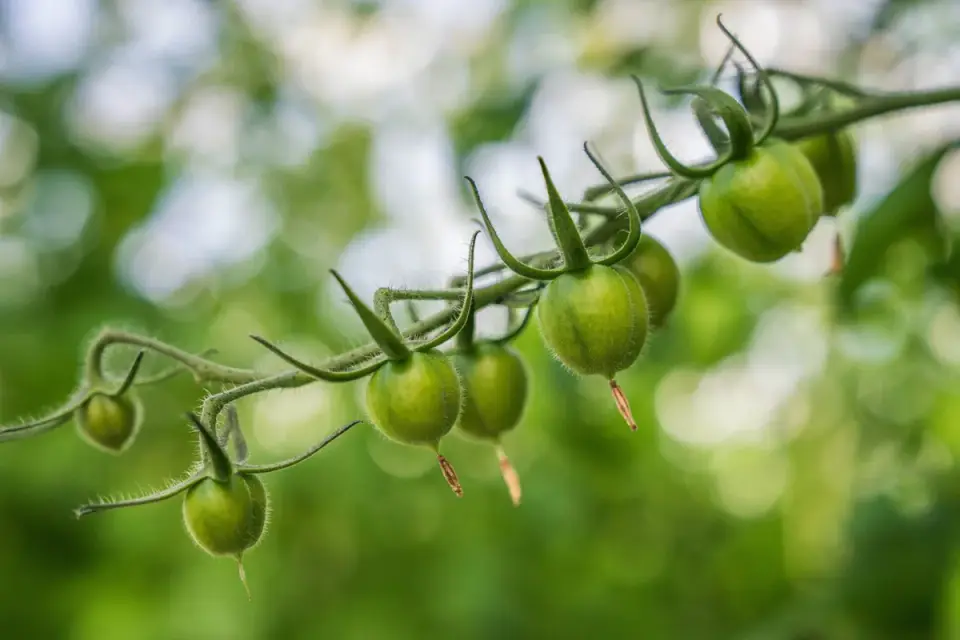
A retriever mix named Biscuit spent one August afternoon doing what retrievers do best: patrolling the vegetable bed while her owner staked tomato plants. By the time anyone noticed, she’d worked her way through a handful of small green fruit still clinging to a broken vine, stem and all. The owner’s first instinct was panic. Her second, after a frantic search, was to call the clinic asking whether her dog needed to be rushed in. That call is more common than most owners realize, and it usually resolves the same way mine did on the phone: watch her closely, don’t feed anything else off that plant, and know what you’re actually watching for.
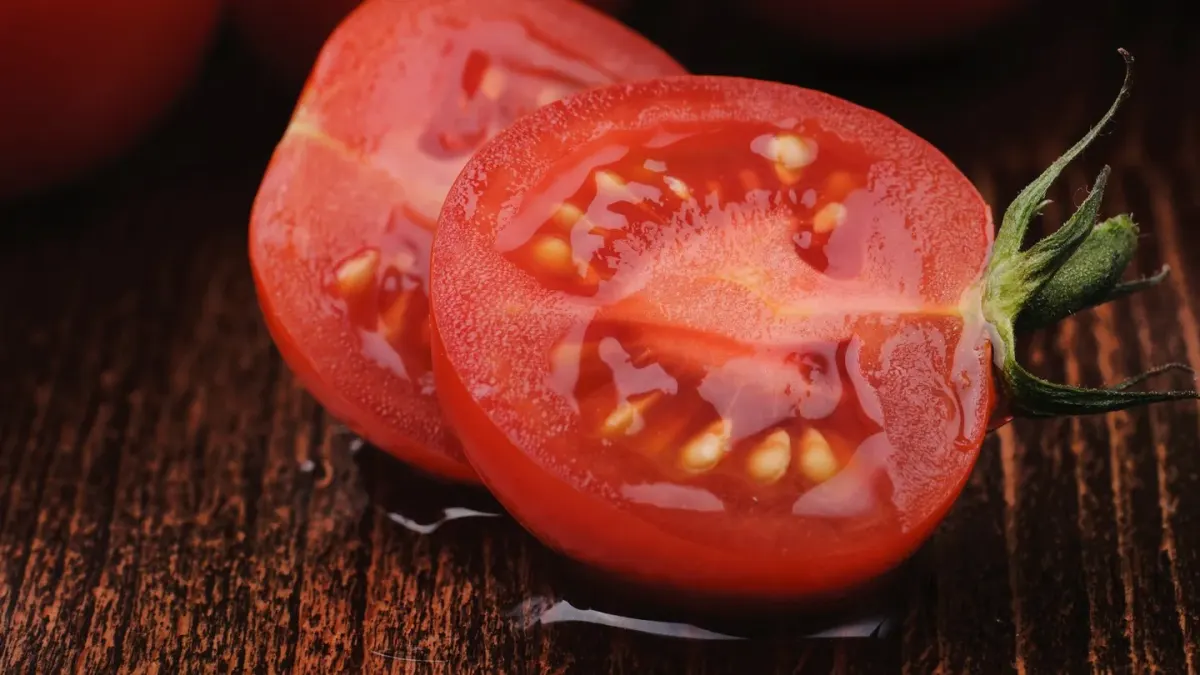
Here’s where I land, and I land there without much hedging: ripe, red tomato flesh, in small amounts, is a reasonable treat for most healthy dogs. The plant it grew on is a different story entirely, and treating the whole tomato family as either uniformly safe or uniformly dangerous misses the actual chemistry at work.
The Nightshade Chemistry That Actually Matters
Tomatoes belong to the nightshade family, Solanaceae, alongside potatoes and eggplant, and the family carries a built-in defense system: glycoalkaloids called solanine and tomatine. Both the ASPCA and the AKC describe the same pattern: these compounds concentrate most heavily in the leaves, stems, vines, and flowers, plus any fruit that hasn’t yet ripened. As a tomato turns from green to red, tomatine and solanine levels drop sharply. That’s the entire basis for the safety line vets draw — not the fruit’s color for its own sake, but what that color signals about the plant’s chemistry underneath it.
A dog who steals a slice of ripe tomato off a cutting board is in a fundamentally different situation than one who works through a green tomato still attached to its vine, and I want owners to hold onto that distinction rather than treating every backyard encounter as equally alarming.
Why My Neuro Brain Cares About a Garden Vegetable
I reach for the imaging study and the acupuncture needle in equal measure, and the tomato conversation is one of the few diet questions where that neurology training actually earns its keep. Solanine and tomatine aren’t just gut irritants at higher doses — Pet Poison Helpline and the AKC both note that larger exposures can produce muscle weakness, tremors, and loss of coordination on top of the more common drooling, vomiting, and diarrhea. Those are neurologic signs, not just digestive ones, and they’re exactly the kind of presentation that sends an anxious owner to an emergency clinic wondering if something far worse is happening. Knowing the mechanism — a plant glycoalkaloid affecting nerve and muscle function, not a mystery neurologic event — changes how urgently a case needs to be worked up, and it’s why I’d rather owners understand the why behind the warning than just memorize the warning itself.
The Dogs Who Should Skip It Even in Its Safe Form
Ripe tomato flesh being generally fine for a healthy adult dog doesn’t mean it’s fine for every dog. New produce of any kind, tomato included, is a mild digestive test, and dogs already managing a digestive condition don’t have much margin for extra tests. A JAVMA review on exocrine pancreatic insufficiency notes that EPI is managed through pancreatic enzyme replacement, nutritional management built around low-residue diets with moderate fat content, and cobalamin supplementation — a regimen with little room for casual additions like a tomato slice, however small. Dogs with a history of pancreatitis, inflammatory bowel disease, or chronic loose stool deserve the same caution.
Even in dogs without a diagnosed condition, gut response to a new food is individual rather than uniform. A 2025 trial on canine probiotic supplementation, published in Frontiers in Veterinary Science, found that diversity metrics did not distinguish non-responders from responders — a finding about probiotics specifically, but one that echoes a broader truth I see across GI cases: two dogs on paper can react very differently to the same new ingredient. That’s a good argument for introducing tomato, like any new food, in a small test amount rather than a generous handful.
A few months after the Biscuit call, another client brought in an older dog who’d been recently switched to a home-prepared diet that leaned heavily on garden vegetables, tomato among them. Nothing about the tomato itself was the problem. The dog’s stool had gone soft over about two weeks, and when we walked back through the diet log together, three new ingredients had been added at once, with no single week of adjustment between them. We didn’t need advanced imaging or a referral for that one. We needed a slower introduction schedule and one ingredient change at a time, which is the same principle I’d apply to switching a senior dog to a new food generally — the gut tolerates gradual change far better than a stack of good intentions arriving all in one bowl.
How Tomato Compares to Other Produce Owners Ask About
Owners who ask about tomatoes are usually working through a mental list of garden vegetables, and it’s worth placing tomato on that list accurately rather than in isolation. Unlike sweet potato, which is a genuinely useful source of fiber and carbohydrate energy when cooked plain, tomato brings little nutritional value to a dog’s bowl beyond a small dose of vitamin C and some water content — it’s a treat, not a functional addition to the diet. And unlike garlic, whose toxic dose scales with the dog’s size and whose danger doesn’t disappear with ripening, tomato’s risk is almost entirely tied to which part of the plant you’re looking at and how ripe that part is. Fiber-dense produce in general deserves portion discipline too. If you’re layering in vegetables regularly, it’s worth knowing how much fiber is too much before tomato becomes one ingredient among several pushing a sensitive gut past its limit.
The Bottom Line
Ripe, red tomato flesh, removed from stem and vine, in a small portion, is not something I lose sleep over in a healthy dog. What earns real vigilance is the plant around it: green fruit, leaves, stems, and vines, which carry enough solanine and tomatine to produce genuine GI and, at higher exposures, neurologic signs. Keep dogs out of the tomato bed, offer only the ripe fruit if you offer it at all, introduce it in a small first portion, and reserve extra caution for dogs already managing a digestive condition. That’s the line I’d defend on this one, and it’s a narrower, more specific line than the blanket tomatoes-are-toxic warning still circulating in a lot of pet-owner folklore.
Frequently asked questions
Can dogs eat tomato sauce or ketchup?
Usually not a good idea. Most jarred sauces and ketchup carry added salt, sugar, and often garlic or onion, and some contain xylitol — all separate hazards that have nothing to do with the tomato itself.
My dog ate a green tomato off the vine. Is that an emergency?
A nibble is unlikely to cause more than a queasy stomach, but watch for drooling, vomiting, weakness, tremors, or wobbliness over the next several hours, and call your vet or a poison control line if you see any of those or if a large amount was eaten.
Are cherry tomatoes different from big slicing tomatoes?
Not meaningfully, as long as they're fully ripe and red. Cut them in half for small dogs so they aren't swallowed whole as a choking hazard.
Can dogs eat tomato plants from the garden?
No. Keep dogs away from tomato plants generally — the leaves, stems, and vines carry the highest concentration of solanine and tomatine of any part of the plant.
Sources
- Toxic and Non-toxic Plants: Tomato Plant — ASPCA
- Can Dogs Eat Tomatoes? — AKC
- Are Tomatoes Bad for Dogs? What's Safe & What's Toxic — Pet Poison Helpline
- Exocrine pancreatic insufficiency management review — JAVMA
- Canine probiotic response variability trial — Frontiers in Veterinary Science