Chew Toys vs. Puzzle Toys for Boredom: Which One Actually Answers What Your Dog Is Asking For
The honest answer is that chew toys and puzzle toys aren't rivals for the same job — they're treatments for two different presenting complaints.
On this page
Here’s a myth worth correcting before we go further: a “bored dog” is not one diagnosis, and a puzzle toy is not a universal prescription for it. I hear owners use “bored” to describe two very different dogs — the one who’s chewed through a table leg by 6 p.m., and the one who’s pacing, whining, unable to settle even after a long walk. Those are not the same problem, and reaching for the same toy for both is how a lot of well-meaning enrichment purchases end up untouched in a drawer.
Quick-decision checklist before you buy either one:
- If your dog chews furniture, baseboards, or your shoes when left alone → start with a chew toy, not a puzzle
- If your dog is fed fast, paces, or seems keyed up with nothing to do → start with a puzzle or food-dispensing toy
- If your dog has a known dental disease history or is an aggressive chewer → skip anything harder than you can dent with a thumbnail
- If your dog gives up on puzzles in under a minute → the difficulty is wrong, not the toy category
- If you’re rotating toys weekly and nothing sticks → you may be solving the wrong kind of boredom
What a chew toy is actually doing
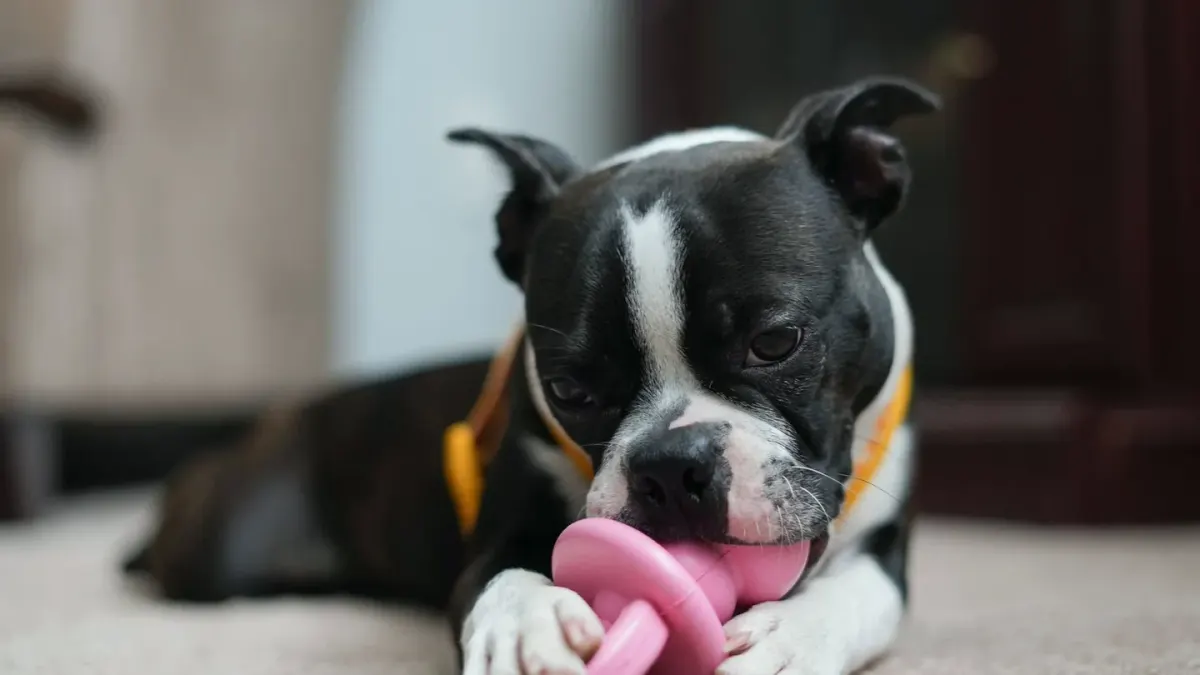
Chewing is a self-rewarding behavior, not a bad habit dogs need to be redirected out of entirely. According to VCA Animal Hospitals, dogs — especially young ones — are strongly motivated to chew, and giving them an appropriate outlet for that motivation can decrease the frequency of unwanted or nuisance chewing elsewhere in the house. That’s the mechanism worth understanding: you’re not eliminating the drive, you’re giving it somewhere legal to go.
VCA’s guidance is also specific about where chew toys go wrong. Pets should be supervised, especially early on. If a dog is chewing pieces off a product, that product isn’t right for them anymore, full stop. And — this is the line I want owners to actually internalize — hard products like hard plastic and bones can cause injuries to a dog’s teeth and generally aren’t recommended.
That last point isn’t a minor footnote. Cornell University College of Veterinary Medicine: Cornell University’s College of Veterinary Medicine documents fractured tooth as a real, mechanically-caused injury, and the mechanism is exactly what you’d predict from imaging and dental exam findings I’ve reviewed in my own caseload: a slab fracture happens when something harder than the tooth enamel meets it at force, most often the carnassial tooth against a bone, antler, or hard nylon chew. The classic bedside test still holds up under scrutiny — if you can’t dent the surface with a thumbnail, or the chew doesn’t flex at all, it’s hard enough to crack a cusp.
In my practice, I’ve had owners bring in dogs for what looked like a neurologic head-tilt or facial pain complaint, only for the workup to trace back to a fractured carnassial tooth from an antler chew — a six-year-old Labrador named after the owner’s request, seventy pounds, who’d been gnawing the same antler for eight months without incident before one hard bite exposed the pulp. The owner hadn’t noticed anything until the dog stopped chewing on that side and started dropping kibble mid-meal. That’s the kind of slow-onset sign that gets missed because it doesn’t look dramatic — no yelping, no visible blood, just a dog quietly favoring one side of its mouth for two or three weeks before anyone connects it to the toy in the yard.
What a puzzle toy asks for instead
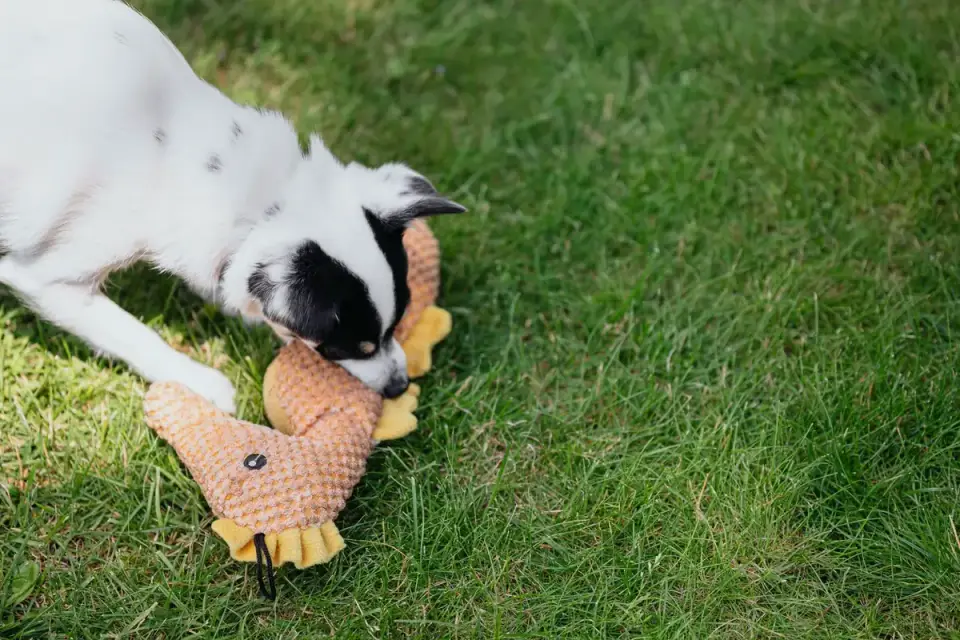
A puzzle toy isn’t solving a chewing problem — it’s solving a thinking problem. The research base here is genuinely encouraging: enrichment strategies that let dogs express species-typical foraging behaviors are tied to improved welfare outcomes, and cognitive tasks that make a dog work for food produce a kind of mental fatigue that looks, behaviorally, a lot like what you’d see after physical exercise. That’s worth sitting with if you’ve got a dog who’s had their walk and is still keyed up an hour later — the boredom you’re watching may be under-stimulated cognition, not unspent energy.
The counterargument I hear most from owners is fair: “My dog gave up on the puzzle in ten seconds and just stared at me.” That’s not a failure of the category, it’s a failure of matching difficulty to the dog in front of you — the same principle VCA applies to chew toys applies here too. A toy that’s too hard early on breeds frustration and gets abandoned; one that’s too easy stops asking anything of the dog and stops working as enrichment at all.
Where the line actually matters: safety over category
Neither category gets a pass on supervision or hardness. Whether it’s a puzzle feeder with a rigid plastic shell or a nylon chew marketed as “aggressive chewer” strength, the same thumbnail-dent test and the same rule apply — if it can’t flex and it can’t dent, it can fracture a tooth against enough bite force, full stop, regardless of which aisle it came from. I’d rather a dog work slightly less hard at a slightly softer puzzle than solve it perfectly and crack a molar doing it.
If your dog’s boredom shows up specifically as restlessness that doesn’t resolve with either toy category, it’s worth reading through why your dog won’t settle in the evening — sometimes the mismatch is timing, not toy choice. And if you’re not sure whether what you’re seeing is boredom at all, boredom vs. separation anxiety is worth ruling out before you buy anything.
Building a rotation instead of picking a winner
I’ve watched dogs cycle through the same three toys for months because nobody rotated novelty back in — and boredom crept back regardless of how well-matched the original toy was. A chew toy handles the mouth’s need for something to do; a puzzle toy handles the brain’s need for a problem. Most dogs I see in practice benefit from having access to both, on a rotation, rather than one category permanently retired in favor of the other.
If your dog is a puppy losing baby teeth, the calculus changes again — a chew that’s appropriately firm for an adult can be genuinely painful against erupting adult teeth, which is covered in more depth in frozen toys for teething puppies. And if the “puzzle” your dog actually needs is closer to a slow-feed or scatter-style challenge rather than a mechanical toy, food-dispensing toys vs. treat balls walks through that distinction on its own.
I keep coming back to one dog from a few years ago — a rescued terrier mix, roughly four years old, whose owner described her as “wrecking the apartment” every day around 5 p.m. We started with a rotation: a flexible rubber chew for the after-dinner restlessness, and a low-difficulty snuffle-style puzzle for her breakfast kibble instead of a bowl. Within about three weeks the owner reported the destructive chewing had dropped off almost entirely, and the dog was visibly more settled by evening — not cured of boredom, but clearly better matched to it. That’s one case, not a study, but it’s the pattern I see often enough to trust the underlying logic.
The bottom line
Match the toy to the behavior you’re actually seeing, not to the boredom label you’ve put on it. A dog who’s destroying furniture needs a chew outlet; a dog who’s restless despite exercise needs a cognitive one. Whichever you choose, the thumbnail-dent test isn’t optional — it’s the difference between enrichment and an emergency dental visit.
Frequently asked questions
Can a puzzle toy replace a chew toy entirely?
Not reliably. Puzzle toys address cognitive boredom, but they don't give a dog an outlet for the physical urge to chew, which VCA Animal Hospitals notes is a strongly motivated behavior in dogs that benefits from an appropriate, dedicated outlet.
How do I know if a chew toy is too hard?
Press a thumbnail firmly into the surface. If it doesn't leave a dent, or the item doesn't flex at all under bite pressure, it's hard enough to risk a fractured tooth, per the mechanism Cornell's veterinary dentistry program describes.
My dog loses interest in puzzle toys almost immediately — what's wrong?
Usually the difficulty, not the dog or the toy category. Start easier than you think necessary and increase difficulty gradually once the dog is reliably solving it.
Sources
- Behavior Management - Enrichment and Activity Toys — VCA Animal Hospitals
- Risks from a Fractured Tooth — Cornell University College of Veterinary Medicine