CoQ10 vs Fish Oil for Aging Dog Heart Support
Medically reviewed by Camille Akin, DVM — For general education — not a substitute for veterinary care.
Between coenzyme Q10 and fish oil for aging dog heart support, one has dosed human-relevant cardiac data behind it — and it isn't the one most owners reach for first.

On this page
The question came from an owner sitting across my exam table with two bottles in her lap, both bought the same afternoon at the same pet store, both promising to “support the aging heart.” One was coenzyme Q10. The other was fish oil. She wanted to know which one to actually give her twelve-year-old Cavalier King Charles Spaniel, Winnie, who’d just been diagnosed with early myxomatous mitral valve disease — the murmur had gone from a soft grade II to a grade III at her last two visits, six months apart. Winnie was thirty-one pounds, still asking for stairs but pausing halfway up them, still greeting the mail carrier but with less enthusiasm than the year before. The owner didn’t want to give both blindly. She wanted a reason.
That’s the right question, and it deserves a real differential, not a shrug and “ask your vet” — though you should still do that before changing anything for a dog with diagnosed heart disease.
What CoQ10 is actually doing at the cellular level
Coenzyme Q10 is a cofactor in the mitochondrial electron transport chain — it’s part of how heart muscle cells generate the ATP they burn through constantly, beat after beat. The specific interest in CoQ10 for dogs with myxomatous mitral valve disease (MMVD, the leaky-valve disease that accounts for most canine heart disease, especially in small breeds like Cavaliers) comes from tissue studies showing myocardial CoQ10 depletion in dogs with congestive heart failure from MMVD, documented in a PMC study on depleted myocardial coenzyme Q10 in Cavalier King Charles Spaniels. The heart muscle that’s failing is also the tissue that’s short on the cofactor it needs to keep making energy. That’s a mechanistically coherent story — it is not yet the same as proof that supplementing reverses outcomes.
On dosing, a randomized, double-blinded trial reported in the American Journal of Veterinary Research found that a daily CoQ10 dose was sufficient to produce at least a three-fold increase in plasma CoQ10 concentration in dogs with MMVD — a pharmacokinetic result, confirming the supplement gets absorbed and raises blood levels, not a clinical-outcomes trial. A separate pilot study of dogs with mitral valve disease reported improved cardiac function measures after 28 days of supplementation, which is encouraging but small and not the kind of evidence I’d build a confident promise on.

Where fish oil earns its place instead
Fish oil’s case for cardiac patients isn’t about energy production — it’s about inflammation and electrical stability. The omega-3 fatty acids EPA and DHA get worked into cell membranes throughout the body, including cardiac tissue, and the research signal that convinced me to take fish oil seriously for arrhythmia-prone hearts specifically involves atrial fibrillation: dogs receiving fish oil showed less inducibility of atrial fibrillation and less conduction heterogeneity than dogs on placebo, per research summarized by Today’s Veterinary Practice. Fish oil also has an appetite-and-cachexia angle that matters a lot in later-stage congestive heart failure, when dogs stop eating enough to maintain muscle.
Dosing for fish oil is where things get sloppier in practice than they should be. General maintenance omega-3 dosing runs roughly 50–75 mg/kg combined EPA+DHA per day; for inflammatory or cardiac-support indications, that range often moves up toward 100–150 mg/kg, per the same Today’s Veterinary Practice guidance. The NRC-derived safe upper limit sits around 280 mg of total EPA+DHA per 100 kcal of diet — worth checking against the actual capsule you’re using, because concentration varies a lot between products, and flax or cod liver oil are not appropriate substitutes for a fish-oil-specific product in a cardiac patient.
I’ve watched owners eyeball a scoop of generic “omega” oil meant for coat and skin and assume it’s doing cardiac-relevant work. It usually isn’t dosed anywhere near what the arrhythmia research used. If you’re supplementing for heart health specifically, the milligrams of EPA+DHA on the label matter more than the word “fish oil” on the front of the bag — which is exactly the kind of label-flipping habit I’d want any owner of a cardiac dog to build, the same instinct this publication applies to every ingredient panel it looks at.
The counterargument, and where I actually land
The honest counterargument for CoQ10 is that dosed human-relevant cardiac outcome data in dogs is thin — we have pharmacokinetic confirmation and one small pilot study, not a large randomized trial showing fewer CHF hospitalizations or longer survival. Fish oil has a comparatively stronger evidentiary anchor in the arrhythmia-suppression research and a plausible, well-studied anti-inflammatory mechanism that extends beyond the heart. If I had to recommend one single supplement to add first for a dog like Winnie, with a vet-confirmed MMVD diagnosis and a rising murmur grade, I’d start with a properly dosed fish oil product before I’d reach for CoQ10 — not because CoQ10 is disproven, but because the fish oil evidence base is deeper and the dosing science is more mature.
That said, I don’t think this is an either/or question once a dog has diagnosed heart disease and a cardiologist involved. Both mechanisms are plausible, neither is a cure, and the two aren’t competing for the same metabolic pathway — there’s no obvious reason a dog on cardiac medication couldn’t take a properly dosed fish oil alongside CoQ10 if a cardiologist signs off. What I push back on is owners choosing between them based on which bottle has the more dramatic label instead of which one has a dose and an evidence trail behind it.
Winnie’s owner left with a fish oil recommendation dosed to her cardiologist’s target range, and a note to bring both bottles to her cardiology recheck before adding CoQ10 on top. That’s the sequence I’d repeat with any owner in her position: confirm the diagnosis and staging with imaging, not just a murmur grade, using something like the guidance in Arthritis vs. Normal Aging Stiffness in Dogs: How to Tell the Difference as a reminder that not every slowdown in an aging dog has the same cause; then let the cardiologist weigh in on dose before layering supplements.
A short note on where supplement quality comes in: whichever you choose, favor a product carrying the Vetnique: National Animal Supplement Council Quality Seal, which requires member companies to submit to independent testing verifying label claims and to maintain adverse-event reporting systems. It doesn’t replace a vet’s judgment on dose, but it does mean the milligram number on the label is more likely to be the milligram number in the capsule.
What to actually do with the two bottles on your counter
Start with the diagnosis, not the supplement aisle. A vet-confirmed murmur grade, and ideally imaging showing chamber size, tells you far more about urgency than anything on a label. From there:
- If your dog has diagnosed MMVD or another form of structural heart disease, ask your cardiologist about a fish-oil product dosed by EPA+DHA milligrams per kilogram, not a generic “coat and skin” capsule.
- If arrhythmia is part of the picture, prioritize the fish-oil conversation first — that’s where the dosed research is strongest.
- Consider CoQ10 as an add-on once a vet has weighed in, understanding the evidence is earlier-stage and mechanistic rather than outcomes-proven.
- Choose formats and delivery deliberately; for dogs who won’t take capsules, the tradeoffs are covered in Chew vs Powder vs Liquid Supplements for Dogs: Which Form Is Most Effective.
- Recheck murmur grade and clinical signs on your cardiologist’s schedule — supplements support monitoring, they don’t replace it.
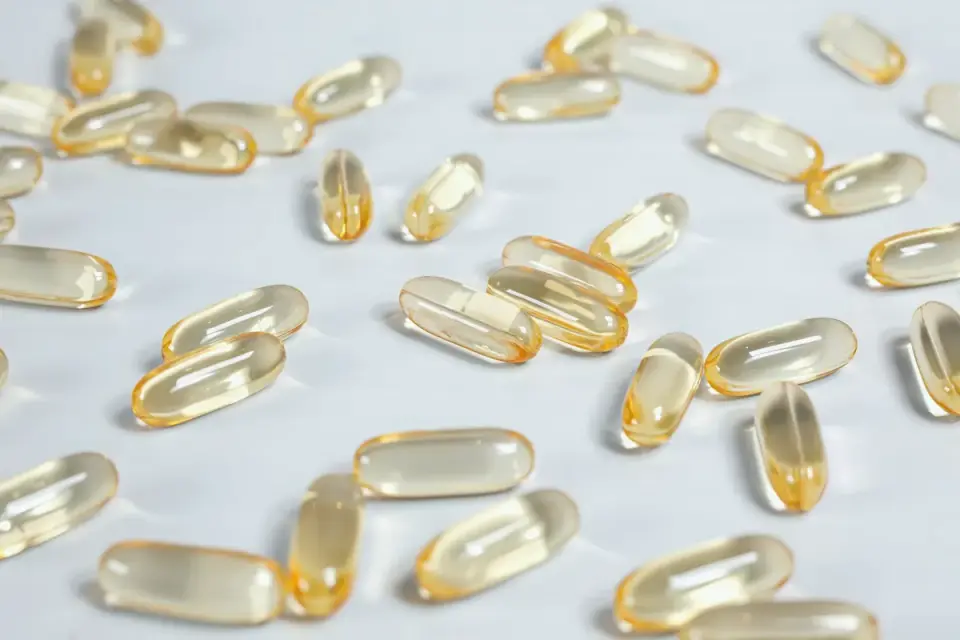
So which bottle actually goes in Winnie’s bowl tonight? For a dog with a rising murmur grade and a cardiologist already in the picture, I’d hand her the fish oil first and keep the CoQ10 on the shelf until the next recheck settles the question — but I’d genuinely like to see a larger canine outcomes trial before I close the book on either one.
Frequently asked questions
Can I give my dog both CoQ10 and fish oil at the same time?
In many cases yes, once a veterinarian or cardiologist has confirmed the diagnosis and approved both — they act on different mechanisms and aren't known to compete for absorption. Confirm timing and total dose with your vet, especially if your dog is on cardiac medication.
Is fish oil safe for a dog with congestive heart failure?
Fish oil is commonly used in dogs with cardiac disease, but the correct dose is based on EPA+DHA milligrams per kilogram of body weight, not a generic "omega" scoop, and should be set with your veterinarian's guidance per the dosing ranges in Today's Veterinary Practice.
How long before CoQ10 or fish oil shows a noticeable change?
Neither supplement works quickly. Plasma CoQ10 changes were measurable within weeks in the AJVR trial, but clinical improvement, if any, is judged over months and through your vet's rechecks — not by day-to-day observation at home.
Sources
- Depleted Myocardial Coenzyme Q10 in Cavalier King Charles Spaniels with Congestive Heart Failure Due to Myxomatous Mitral Valve Disease — PMC (National Center for Biotechnology Information)
- Randomized, double-blinded, controlled trial of the effects of coenzyme Q10 supplementation on plasma coenzyme Q10 concentration in dogs with myxomatous mitral valve disease — American Journal of Veterinary Research
- Fish Oil Dosing in Pet Diets and Supplements — Today's Veterinary Practice
- What Is the NASC Quality Seal for Pet Supplements? — Vetnique