Dog Hind Leg Weakness: A Neurologist's Checklist for Telling Painful From Disconnected
Medically reviewed by Karen Inzana, DVM, PhD, DACVIM (Neurology) — For general education — not a substitute for veterinary care.
Hind leg weakness in dogs is a symptom, not a diagnosis, and the difference decides your dog's next test.
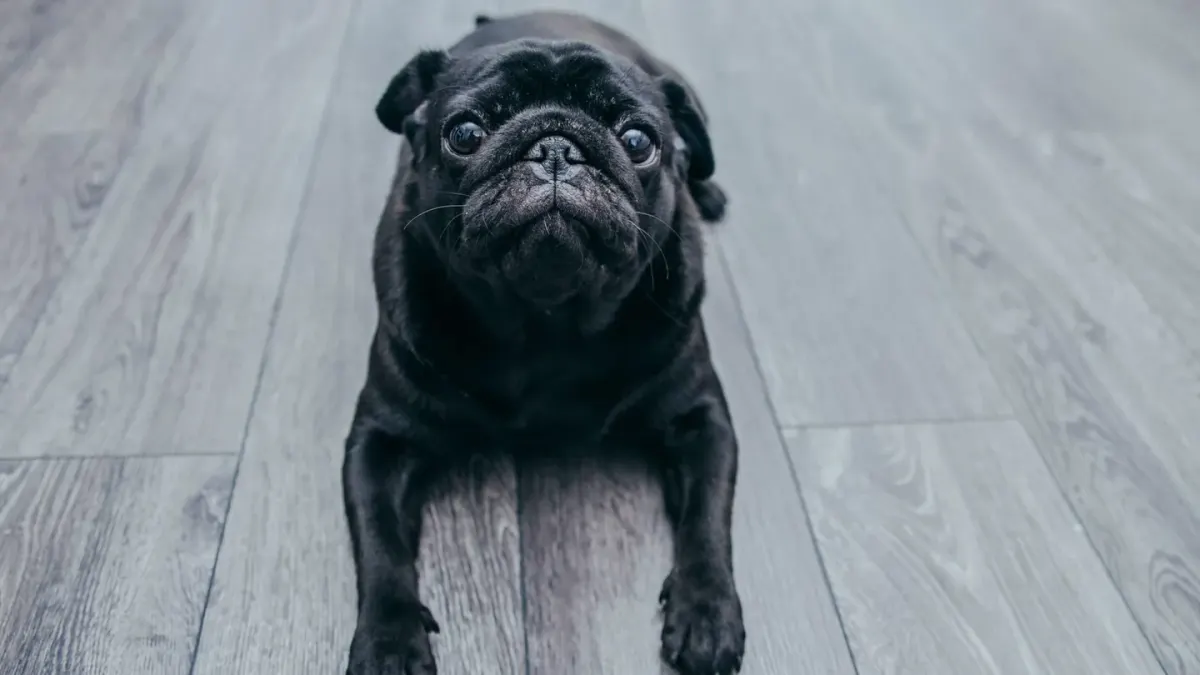

A ten-year-old mixed-breed I’ll call Biscuit belongs in this story the way a hundred dogs like her belong in every neurology waitlist: she started missing the third stair. Not falling, not crying out — just a half-beat pause, back paw searching for a step that was already under her nose. Her owner assumed arthritis and started her on a joint supplement from the pet store. Six weeks later Biscuit was dragging the tops of her back toes across the kitchen tile, nails audibly scraping, and that sound is the one detail that should have sent her to a clinic on week one instead of week six. A scuffed nail is not an orthopedic sign. It is a proprioceptive one, and it usually means the problem lives in the spinal cord, not the joint.
Before anything else, run this checklist. It won’t hand you a diagnosis, but it will tell you which specialist to call first.
- Does she know where her paw is? Gently fold one back paw so the top touches the floor. A dog with normal positioning sense corrects it in under a second. A delayed or absent correction is a neurologic red flag.
- Is it symmetric? Weakness on both back legs, appearing gradually over weeks, reads differently than sudden weakness on one side only.
- Is there pain on manipulation? Painful, guarded joints point toward arthritis or a disc problem; pain-free weakness points more toward a slower degenerative process.
- Did it happen in minutes or months? Sudden collapse is an emergency regardless of cause. A months-long drift allows time for a proper workup.
- Is she toileting normally? Loss of bladder or bowel control alongside hind weakness escalates the urgency immediately.
Each of those five questions maps onto one of four broad mechanisms: orthopedic, neurologic, metabolic, or cardiac. Chronic joint inflammation — arthritis, hip dysplasia, cruciate disease — is the most common orthopedic driver, and it can mimic neurologic weakness closely enough that owners guess wrong constantly. What separates them on exam is proprioception: dogs with pure orthopedic disease usually still know exactly where their feet are, while proprioceptive deficits are frequently the earliest measurable sign of a neurologic problem, sometimes showing up before the dog looks weak at all. That distinction, and the standardized way to test it, comes from the neurologic exam framework described by the Merck Veterinary Manual.
Intervertebral disc disease sits at the crossover point. It starts as a structural, orthopedic-sounding problem — a disc bulging or rupturing along the spine — and becomes a neurologic one the moment it compresses the spinal cord. Discospondylitis and spinal tumors work the same way from a different direction, purely neurologic causes that still show up first as a wobble in the back end. If you are trying to plan around one supplement that reliably fits a mobility routine for senior dogs across all four mechanisms, our guide on what longevity supplement vets recommend for senior dogs covers where the evidence is actually strongest.
One mechanism deserves its own paragraph because it gets missed. Metabolic and cardiac disease can present as hind-end weakness with no orthopedic or spinal explanation at all — a dog whose back legs give out during exercise because circulation or heart function, not the spine or the joints, can’t keep up. Taurine-responsive cardiomyopathy is a documented example of this pattern, and it is one of the more reversible ones when caught early; we’ve written separately about signs of taurine deficiency in dogs for owners who notice weakness alongside exercise intolerance rather than a stair-climbing problem.

Degenerative myelopathy is the diagnosis most owners fear and the one most poorly understood. It is a slow degeneration of the spinal cord, typically starting between eight and fourteen years of age, and it begins almost exactly the way Biscuit’s story did — incoordination in the back legs, worsening over six months to a year. Here is the part I want to be direct about: DM cannot be confirmed by MRI. The spinal cord changes it causes are not visible on conventional imaging, and a definitive diagnosis technically requires postmortem histopathology. In practice, most neurologists build a presumptive diagnosis from history, exam findings, and genetic testing for the SOD1 mutation, a pattern confirmed by a survey of nearly 200 neurology and rehabilitation professionals published in the Journal of Veterinary Internal Medicine. Genetic testing itself, through labs coordinated by the OFA (Orthopedic Foundation for Animals), identifies dogs as clear, carrier, or at-risk — but at-risk is not the same as affected, since the mutation shows incomplete penetrance. Reasoning from that mechanism matters more than reasoning from the test result alone.
This is also where I’ll flag the overreach I see most often in senior-dog marketing. Ingredients like quercetin and resveratrol show up constantly in longevity chews aimed at aging joints and nerves, and there is real laboratory work behind both. A Pharmaceuticals (MDPI) study found that quercetin, at the concentrations tested, didn’t disrupt feeding behavior in an invertebrate model — a useful safety data point, not a mobility claim. A separate Phytomedicine study on resveratrol found that embryonic exposure sped up development but shortened adult lifespan in an insect model — a finding about dose and timing, not about a dog’s back legs. Supporting normal cellular function is a real, defensible claim. Treating a degenerating spinal cord is a different claim entirely, and nothing in this evidence base supports making it.
By the time Biscuit reached a clinic, her exam told a clean story: delayed proprioception in both back legs, normal pain sensation, no spinal pain on palpation, and a gait that worsened with exercise. That combination pointed toward a slow neurologic process rather than an arthritic one, and it changed the plan from a joint supplement to a referral. Not every dog’s story resolves that cleanly. Some genuinely do have both an aging spine and aging hips at once, and untangling which one is driving today’s stumble takes the same structured exam every time.
So where does that leave a checklist-minded owner. If the weakness is symmetric, slow, and pain-free with a clear proprioceptive deficit, ask specifically about DM and SOD1 testing rather than waiting on repeat X-rays. If it’s asymmetric, painful, or sudden, treat it as urgent and skip the wait-and-see. If your dog is already on — or considering — a NAD+ or antioxidant chew for general vitality, keep the goal honest: our piece on NAD+ precursor chews for a dog whose energy dropped is a useful companion read for separating supported cellular function from a claim of treating disease. The mechanism should decide the plan. The marketing copy shouldn’t get a vote.
Frequently asked questions
Is hind leg weakness in dogs always a spinal cord problem?
No. Chronic joint pain from osteoarthritis is the single most common orthopedic cause of hind-limb weakness, and many dogs with hip or knee disease never have a neurologic issue at all.
What is the fastest way to tell if my dog's weakness is neurologic?
Watch how the paw responds when you gently flip it so the top of the foot touches the floor. A dog with normal proprioception rights it almost instantly; a delayed or absent correction points toward a neurologic cause, which is part of the standard exam described by the Merck Veterinary Manual.
Can a supplement reverse degenerative myelopathy?
No supplement reverses degenerative myelopathy. Antioxidant and NAD+-precursor ingredients are studied for general cellular support, not for restoring spinal cord function, and framing them as a fix would be overreach past what the evidence shows.
Should I ask my vet for genetic testing before an MRI?
It's a reasonable first ask. Many neurologists build a presumptive diagnosis of degenerative myelopathy from history, exam findings, and SOD1 genetic testing rather than starting with MRI, per a survey published in the Journal of Veterinary Internal Medicine.
Sources
- Degenerative Myelopathy — OFA (Orthopedic Foundation for Animals)
- The Neurologic Examination of Animals — Merck Veterinary Manual
- Diagnosis and management of dogs with degenerative myelopathy: A survey of neurologists and rehabilitation professionals — Journal of Veterinary Internal Medicine
- Quercetin feeding-behavior study — Pharmaceuticals (MDPI)
- Resveratrol embryonic-exposure study — Phytomedicine