Why Does My Dog Eat His Own Poop? A Vet's Guide to Coprophagia
Medically reviewed by Jessica Ennis, DVM, CVA — For general education — not a substitute for veterinary care.
Eating stool isn't rare, isn't usually a sign of poor nutrition, and in most healthy adult dogs it's a habit worth managing rather than a mystery worth solving with a new food.
On this page
Is it a medical problem, a behavior problem, or just something dogs do? That’s the question I get asked in almost the same words every time — usually by an owner standing in the exam room a little embarrassed, holding their dog’s leash a bit too tight. Eating stool isn’t rare, isn’t usually a sign of poor nutrition, and in most healthy adult dogs it’s a habit worth managing rather than a mystery worth solving with a new food.
I remember a client with a two-year-old spayed female beagle mix named Daisy, about 28 pounds, who’d started eating her own stool in the backyard every evening around dusk. The owner had already switched foods twice, added a probiotic, and tried a store-bought stool deterrent spray before she came in. Daisy’s bloodwork and fecal exam were unremarkable. What changed things wasn’t a supplement — it was moving her evening potty break to right after her walk instead of an hour later, when she’d been alone in the yard with nothing to do. Within about three weeks the behavior had dropped to occasional rather than nightly. That timeline matters, because owners often expect an overnight fix, and coprophagia rarely resolves that fast even when you’ve found the right lever.
What’s Normal and What Isn’t
Puppies eating stool, including their own, is close to baseline behavior — dams clean up after their litters for the first several weeks, and puppies sometimes mimic it or simply investigate everything with their mouths before they age out of it. That’s the “normal” side of the comparison. On the other side sits the adult dog who starts a new stool-eating habit out of nowhere, especially alongside weight loss, changes in appetite, diarrhea, or a greasy or unusually large stool volume — those combinations point toward a medical cause and deserve a vet visit before anything else.
A large web-based survey led by veterinary behaviorist Dr. Benjamin Hart, published as The Paradox of Canine Conspecific Coprophagy in Veterinary Medicine and Science, is one of the more useful data points I point owners to. It found that roughly 16% of dogs qualified as “serious” stool eaters, caught in the act five or more times, and 24% had done it at least once. What surprised most of the owners I’ve shared it with: 85% of the dogs who ate stool preferred other dogs’ feces over their own, and 92% preferred it fresh, one to two days old. So if your dog is specifically eating his own, freshly produced stool, that’s actually the less common pattern in the data — and worth mentioning to your vet as a detail, not a red flag on its own.
The Medical Workup Comes First
VCA Animal Hospitals outlines the medical causes worth ruling out before treating this as a pure behavior issue: intestinal parasites, malabsorption or maldigestion disorders, and conditions like diabetes or thyroid disease that can increase appetite or alter how a dog processes food. A fecal exam and bloodwork are inexpensive relative to months of guessing, and I’d rather run them early than have an owner cycle through three diets before we find a treatable cause. This is the piece I’m most decisive about: don’t skip the workup to go straight to management, even though management is usually where the real fix lives once the workup comes back clean.
Once medical causes are off the table, what’s left is mostly behavioral and environmental — boredom, under-stimulation, learned attention-seeking (a dog who gets a big reaction, even a scolding, may repeat the behavior because it reliably gets your attention), and stress. Multi-dog households show this pattern clearly in Hart’s data: only about 20% of dogs in single-dog homes had the habit, compared to roughly a third of dogs in three-dog households, which fits with coprophagia often being a social or competitive behavior around resources rather than a nutritional one.
Where Stress Actually Fits
Here’s where I hear the most pushback. Owners want a supplement to fix this, and I understand the appeal — it’s a lot easier to add something to a bowl than to change a routine. But there’s a real counterargument worth taking seriously: a genuinely anxious or under-stimulated dog is not going to stop a stress-driven habit because you added an ingredient to dinner. Environment and routine changes do the heavy lifting. Where a calming ingredient can reasonably fit is as one piece of a broader plan for a dog whose coprophagia tracks with generally anxious behavior — pacing, whining when left alone, hypervigilance — not as a standalone fix.
If stress does look like a contributing factor, a few ingredients have real evidence behind them for canine anxiety and stress, though none are marketed as coprophagia treatments specifically, and none replace ruling out medical causes or addressing the environment first. A review in Biomedicines notes that for chamomile, “for the remaining species, evidence is derived mainly from preclinical studies or traditional use” — worth knowing before you expect dramatic results. KSM-66 ashwagandha has more clinical backing: a systematic review in Cureus “analyzed multiple RCTs and concluded that ashwagandha has a moderate positive impact on stress reduction and cognitive performance,” though that review is largely human-focused. L-theanine has the most specific dosing data, with a review noting an effect “except for one study on psychotic anxiety (SMD = 0.54; 400 mg/day for 8 weeks)” in a human trial published via Molecular Psychiatry. I mention the human-study caveats on purpose — extrapolating human dosing directly onto a 15-pound terrier is exactly the kind of shortcut I’d rather an owner not take without a vet’s input.
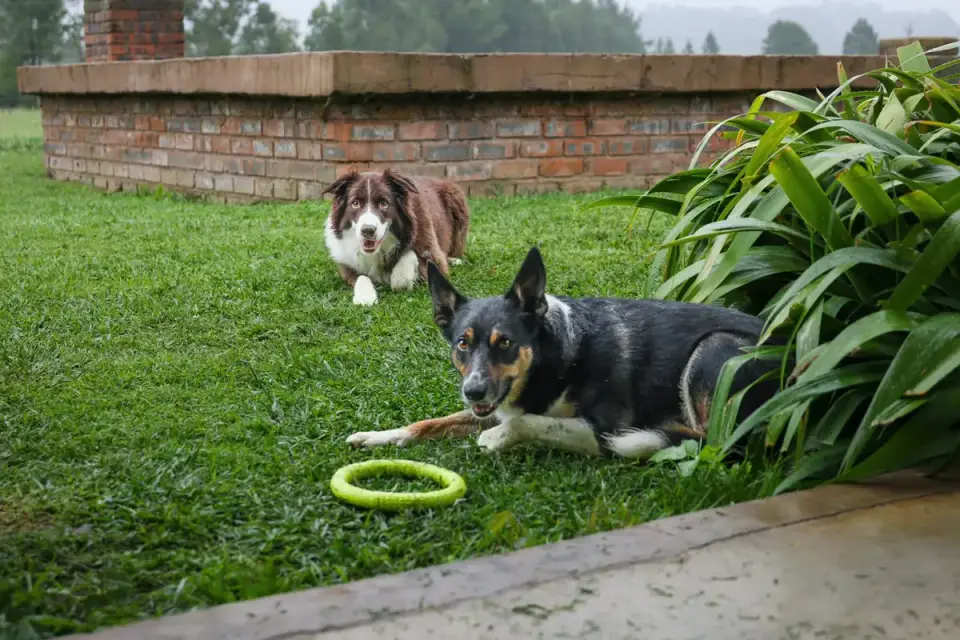
The dog I think about most on this topic is a senior mixed-breed named Otis, about 11 years old, whose owners adopted a second dog and watched Otis start eating stool within about two months — a timeline that lines up with the household-size pattern in the survey data above. He wasn’t sick. He was competing for attention with a new, younger housemate, and picking up feces in the yard had become part of a bigger pattern of following the new dog around and hovering near food. We didn’t fix it with a product. We fixed it by giving Otis dedicated one-on-one time again and by having his owners pick up the yard before he was ever out there unsupervised. It took closer to six weeks before his owners felt confident the habit was gone, not two. I tell owners that timeline up front now, because expecting a week-long fix is the fastest way to give up on a plan that was actually working.
For dogs whose coprophagia shows up alongside broader anxiety, it’s worth reading up on related behavior patterns — our guide to independence training for a velcro dog covers a lot of the same under-stimulation and attachment dynamics, and if the habit started right after a move or adoption, the 3-3-3 rule for a new rescue dog gives a realistic settling-in timeline that applies here too.
What Actually Changes the Behavior
Prompt cleanup is still the single most effective tool — a dog can’t eat what isn’t there, so picking up the yard immediately and leashing dogs during potty breaks until the habit fades removes the opportunity entirely. Beyond that, address the gap that’s driving it: more structured exercise and mental enrichment for a bored dog, more supervised one-on-one time for an attention-seeking dog, and a consistent routine for an anxious one. Diet plays a smaller role than most owners expect, but if your dog’s stool looks abnormal — greasy, unusually voluminous, or poorly formed — that’s a conversation for your vet about digestion, not a reason to add a random supplement. If you’re curious what belongs in a dog’s diet versus what doesn’t, our piece on whether dogs can eat sweet potato is a good starting point for thinking through ingredients on their actual merits, and our breakdown of probiotic chew cost per serving is useful if a vet has recommended a probiotic for an unrelated digestive issue and you’re comparing options.
Where I Land
Rule out medical causes first — always, even when you’re fairly sure it’s behavioral. Then manage the environment: fast cleanup, more structure, more attention where attention is the actual gap. Give it real time, four to six weeks is a more honest estimate than one, before deciding a plan isn’t working. Save supplements for dogs whose anxiety is bigger than the poop-eating itself, and treat them as one piece of a plan your vet is aware of, not the plan.
Frequently asked questions
Is it dangerous if my dog eats his own poop?
For most healthy dogs it isn't dangerous on its own, though it can occasionally transmit intestinal parasites, so keeping your dog on routine parasite prevention and having a fecal exam done is a reasonable precaution.
Will switching dog foods stop coprophagia?
Usually not, unless bloodwork or a fecal exam turns up a specific digestive or malabsorption issue — most cases are behavioral or environmental rather than nutritional.
How long does it take to stop a dog from eating stool?
Plan on four to six weeks of consistent cleanup and routine changes before judging whether a plan is working; expecting results in a few days sets most owners up to give up too early.
Sources
- The Paradox of Canine Conspecific Coprophagy — Veterinary Medicine and Science
- Dog Behavior Problems - Coprophagia — VCA Animal Hospitals
- Chamomile and Anxiety & Stress Review — Biomedicines
- KSM-66 Ashwagandha Systematic Review — Cureus
- L-Theanine and Anxiety Review — Molecular Psychiatry