Is Walking Alone Enough Exercise for Your Dog?
A veterinary nutritionist and sports-medicine guide to when daily walks meet a dog's needs — and when sniffing, play, strength, and recovery work need to join in.
Walking keeps the engine idling, yet most dogs need sniffing, play, and strength work to truly feel finished.

On this page
A four-year-old, 62-pound mixed-breed dog trots the same half-mile loop every morning, pulls home still panting through the leash, and by 7 p.m. is racing circles around the coffee table. The owner asks the question I hear weekly in sports-medicine exams: we walk every day, so why is he still wired? That mismatch is where this decision starts, because a walk counts, but what it trains is narrower than most of us assume.
From a physiology view, steady leash walking is low-intensity aerobic work. It supports cardiovascular conditioning, joint lubrication, weight management, and gastrointestinal motility, and repetitive movement helps maintain range of motion after injury. What it does less well is load muscle eccentrically, challenge balance and proprioception, allow sprint-speed gallop mechanics, or give the olfactory brain the long, choice-driven investigation it evolved to do. I weigh what food and American Veterinary Medical Association rest can realistically do for diet, mobility, and recovery here: sound nutrition supports tissue repair and steady energy, yet no bowl fixes an under-loaded shoulder or an unmet need to sniff and solve.
When a daily loop does the job
For some dogs, walking is enough on most days. Healthy senior dogs with arthritis, brachycephalic breeds in heat, post-operative dogs on restricted activity, and truly low-energy adults often do best with split, sniffy walks rather than hard play. The Merck Veterinary Manual frames exercise around gradual conditioning and observation for fatigue, which matches rehab practice: watch gait, respiratory rate, and recovery time rather than chasing mileage.
Signs the current plan is working are concrete. The dog settles within 15-20 minutes after returning, sleeps through predictable rest blocks, maintains lean body condition, and shows even muscle over the thighs and lumbar spine. Nails wear evenly, stools are regular, and evening behavior is social rather than frantic.
My bias is clear: I would rather see a 12-year-old, 48-pound Beagle get two 15-minute sniff walks with footing changes than one forced 45-minute march. Total minutes matter less than dose control.
Why steady steps leave athletes restless
Young sporting and herding breeds, adolescent terriers, and fit adults between two and five years were selected for bursts, turns, carrying, and problem-solving. Leash walking holds them to a human pace on a short tether, with little lateral movement, hill loading, or off-leash choice.
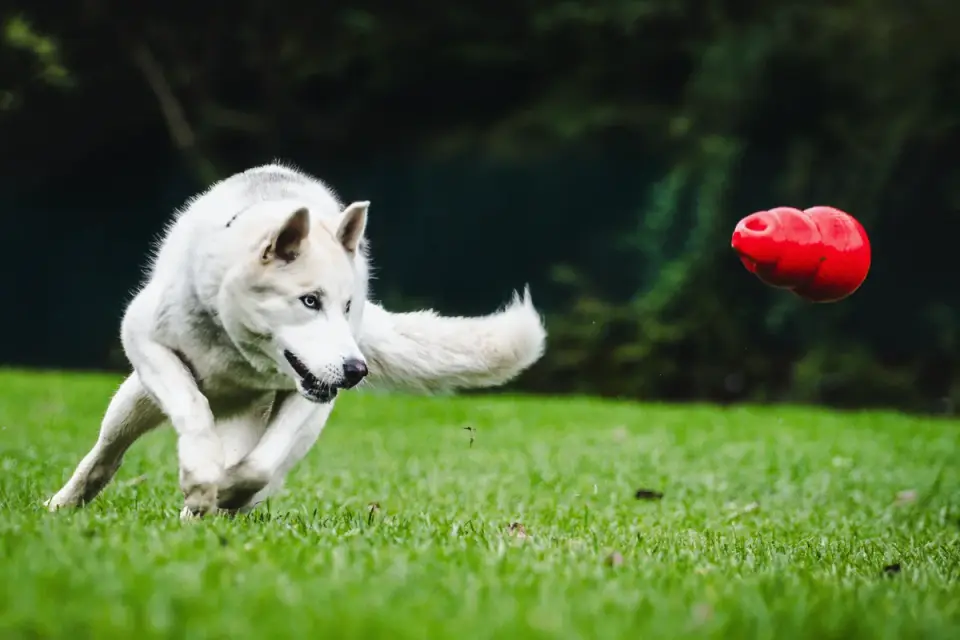
Three weeks into a new routine, a two-year-old 54-pound husky mix I followed as a composite case was still getting a 40-minute neighborhood walk daily, yet barrier frustration at the window was climbing. The walk provided aerobic minutes, but heart rate never reached play intensity and nasal investigation was limited to six-foot leash corrections. By day 10 after we swapped one loop walk for a long-line sniff session plus two five-minute tug-and-drop intervals, evening pacing dropped and the owner could actually brush him without wrestling. Narrative is not proof, but the pattern repeats: unspent sprint and sniff budgets leak out as jumping, mouthing, and night zoomies.
What complete movement actually includes
Think in systems, not minutes. A complete week usually blends aerobic work for heart and lungs, strength and proprioception for joints, nasal and cognitive work for the brain, and true rest for adaptation. Cornell University College of Veterinary Medicine emphasizes play, training, and varied activity alongside walks, especially for mental health.
In practice that looks like this:
Sniffing is exercise. Free-choice sniffing on a 15- to 30-foot long line in grass lowers pace, drops head and neck posture, and engages the olfactory cortex in a way pavement marching does not. Owners exploring Why Sniffing Tires Dogs Out More Than Walking often find a 20-minute sniff walk tires a dog more than a 40-minute heel.
Short bursts count. Two to three weekly play bouts — recall games, flirt pole with rules, controlled tug with a drop cue, hill repeats for sound adults — train acceleration and deceleration that walks skip.
Strength protects joints. Cavaletti poles, slow cookies between the legs, sit-to-stand repetitions, and varied surfaces build hind-limb muscle that unloads arthritic knees and elbows.
Chewing and problem-solving finish the day. For dogs on crate rest, ideas from How to Mentally Tire a Dog That Can’t Exercise preserve conditioning without violating restrictions.
Fuel and recovery decide whether that load helps. Adequate protein, balanced minerals, omega-3s where indicated, and sleep after hard days may help support normal muscle repair and joint comfort, but they do not replace progressive loading.
The edge case owners miss
The complication is not always too little exercise. It is too much of one kind without recovery.
A nine-year-old, 71-pound Labrador in a composite rehab history was walking 3 miles daily plus weekend fetch because the owner feared weight gain. Three weeks in, morning stiffness lasted 40 minutes, sit-to-stand became two-part, and enthusiasm for the leash faded. Radiographs showed bilateral hip arthritis and reduced hind-limb mass. We cut distance by half, added three weekly five-minute strength circuits, daily sniff time, and two full rest days. By day 18 the dog rose faster and chose play again. More steps had been driving inflammation and soreness; better-distributed load restored function.
That is the strongest counterargument to my own recommendation: if I say most adult dogs need more than walking, someone will add miles and fetch until a sore dog breaks. My answer stays the same, with a guardrail. Add variety before volume, and track recovery.
Where I land on walks alone
For healthy, low-drive adults and mobility-limited dogs, a well-built walking program can be enough. For the average adolescent, working breed, or fit adult, walking is the base layer.
My evidence-bounded rule: keep daily walks, then add two sniff-focused outings, one to two short play or strength sessions, and one true rest day per week for a month. If settling time shortens, body condition holds, and lameness, coughing, or next-day fatigue do not appear, you found sufficiency.
Talk with your veterinarian before sprint work if your dog is over eight years, brachycephalic, cardiac-compromised, orthopedically injured, or suddenly exercise-intolerant. Walks keep dogs in the world. Sniffing, play, strength, and sleep are what let them use it well.
Frequently asked questions
How much walking does a dog need per day?
Most healthy adults do well with 30 minutes to 2 hours of total activity daily, split into walks plus sniffing, play, or training. Age, breed, health, and heat change the dose — watch recovery and settling behavior, not just the clock.
Is a 20-minute walk enough for a dog?
It can be for a senior, brachycephalic, or low-energy dog, especially if the walk allows sniffing. For a young herding, sporting, or terrier breed, 20 minutes on leash rarely meets sprint, strength, and mental-work needs.
What are signs my dog needs more than walks?
Evening zoomies and inability to settle, destructive chewing despite daily walks, leash frustration, weight gain with muscle loss over the thighs, and constant demand barking after exercise often point to unmet sniff, play, or strength needs.
Sources
- Exercise and Play With Your Pet — American Veterinary Medical Association