Off-Leash Play vs On-Leash Walks: Which Actually Exercises Your Dog?
Off-leash play spends more energy per minute, but the leash still teaches the control that keeps a joint out of trouble.
On this page
Start with what your dog’s body actually does in each scenario, because the two aren’t interchangeable and treating them that way is where owners get into trouble.
On a leash, a dog moves at a fairly fixed pace, in a mostly straight line, with you setting the rhythm. Off leash, the same dog accelerates, cuts, pivots, and stops on a dime chasing a squirrel or another dog’s play bow. Those are different physiological events. One is steady-state cardio. The other is closer to interval sprint training, with all the joint torque that implies.
Do this first: match the exercise type to the dog in front of you, not a general rule. A young, structurally sound retriever chasing a ball across a field is doing something very different, tissue-wise, from a seven-year-old dog with early hip changes doing the same thing. Both dogs benefit from movement. Only one of them can absorb the sudden direction changes without a cost.
What each style is actually training
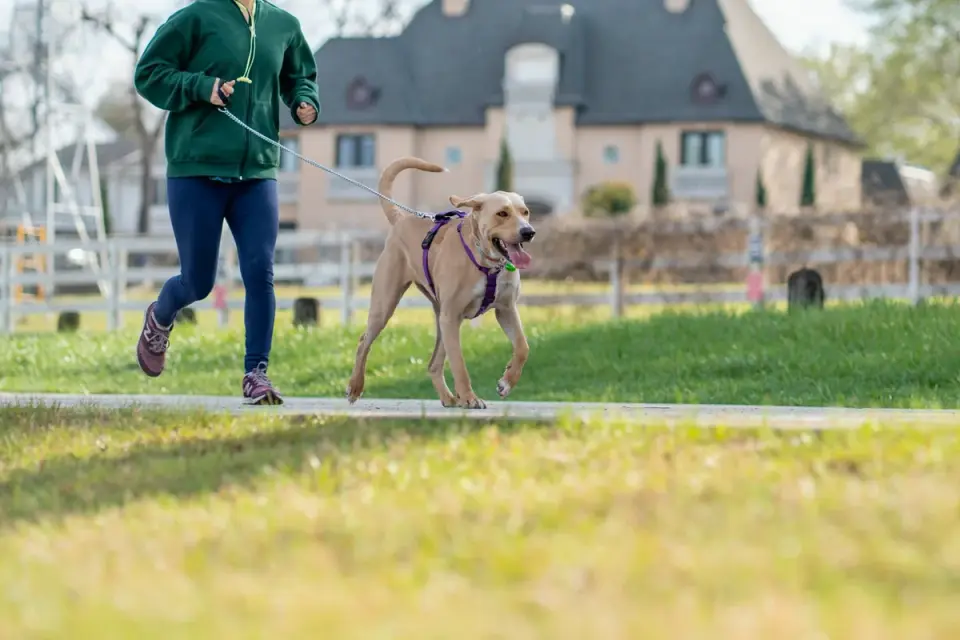
A leash walk trains endurance, gait consistency, and — frankly — impulse control, since the dog has to regulate its own pace to yours. It’s low-variability work, which is exactly why it’s a safe default for puppies whose growth plates are still closing, seniors with reduced proprioception, and any dog recovering from an injury.
Off-leash play trains something else: explosive power, reactive braking, and the kind of multidirectional agility that a straight-line walk never touches. That has real value — it’s closer to what a dog’s joints and connective tissue were built to handle in short bursts — but it also concentrates load into single moments instead of spreading it across a mile.
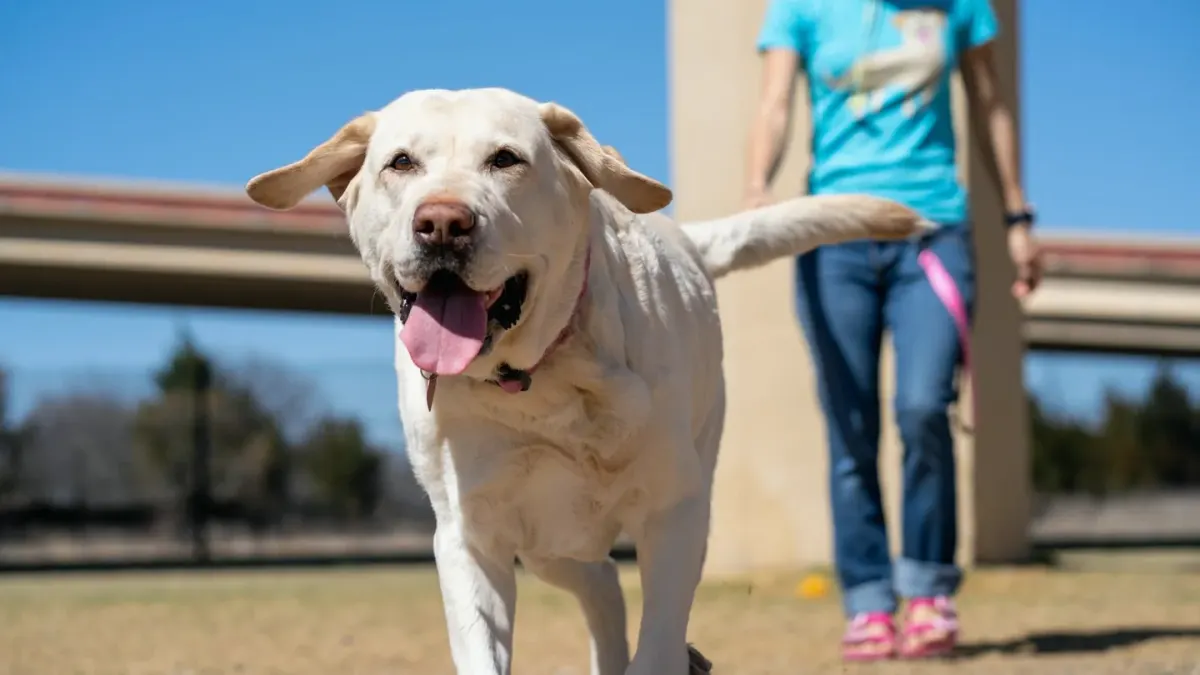
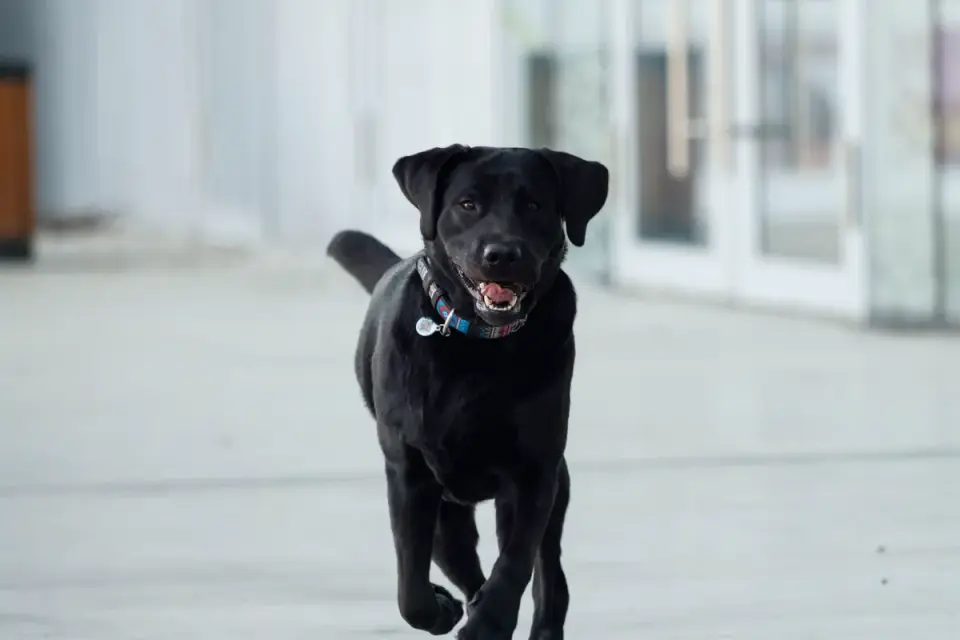
In my practice I’ve watched this play out in dogs that looked, on paper, identical. Two Labradors, both around 65 pounds, both five years old, came in six months apart with similar owner complaints: a new hesitation before jumping into the car. The first dog was a dedicated fetch-and-frisbee player, three sessions a week at the local dog park, and his gait exam showed subtle asymmetry after hard cutting movements. The second dog walked forty-five minutes daily on-leash and rarely ran flat out. His exam was clean; the hesitation traced back to a slick tile floor at home, not a joint issue. Same breed, same weight class, same complaint on the intake form — and completely different mechanical stories once I actually watched them move. That’s the piece a symptom list alone never tells you.
Where joint load actually adds up
Distance and impact aren’t the same variable. A dog can walk two miles on a leash and accumulate less peak joint stress than it does in ten minutes of hard off-leash cutting on a soft, uneven field. Neither is inherently wrong — the question is what that particular dog’s joints, and history, can absorb that day.
For dogs already showing wear — arthritis, a prior cruciate repair, or just an aging hip — the research on joint-support ingredients is worth knowing regardless of which exercise style you favor, because both put some load through the same tissue. A review in the Journal of Veterinary Medical Science found glucosamine HCl can help prevent experimentally induced cartilage degradation in vitro, and a study published in Frontiers in Veterinary Science found that chondroitin supports healthy synovial fluid homeostasis. Neither claim means a supplement replaces good exercise management — it means the cartilage and the fluid around it have measurable biology that responds to specific inputs, and exercise choice is one of those inputs too.
Green-lipped mussel gets cited in the same conversation. A study in Nutrients found that mussel-derived compounds alleviated paw swelling and reduced markers of inflammation — including TNF-α and IL-17 — in an animal model of joint inflammation. That’s laboratory evidence, not a guarantee for every dog on a trail, but it’s the kind of mechanism that explains why vets bring these ingredients up at all when a dog’s exercise routine gets more demanding.
If you’re weighing terrain as much as leash length, our piece on swimming vs. walking for an arthritic dog goes deeper into which surfaces actually spare a sore joint. And if the real question underneath yours is duration rather than off-leash freedom, how long a dog’s walk should be is the more direct answer.
Reading your own dog instead of a general rule
I ask owners to watch three things after either kind of session: how the dog gets up from lying down an hour later, whether it favors a limb on the first few steps, and whether it’s still willing to play the next morning. A dog that’s stiff getting off the couch that evening got more than it could comfortably absorb — regardless of whether that came from a leash walk that ran too long or an off-leash session that involved too many hard stops.
Puppies and small-breed dogs need a different lens entirely, since growth plates and joint size change the calculation; our guide to exercise ideas for toy and small breeds walks through that in more detail. For dogs covering serious ground, how far a dog can walk or hike in a day is worth reading before you plan a long off-leash outing on unfamiliar terrain.
The owners I see most often aren’t choosing one style and abandoning the other — they’re blending both and adjusting the mix as the dog ages. A young, structurally healthy dog can usually handle regular off-leash bursts alongside its daily walks. An older dog, or one with a known joint issue, often does better with the leash carrying most of the exercise load, with off-leash time reserved for shorter, controlled sessions on forgiving ground.
Weigh the two like a nutritionist weighs a supplement label: not as a competition to declare a winner, but as two tools with different specs, matched to what the dog in front of you can actually handle this week.
The short version
Off-leash play burns more energy per minute and builds a kind of athletic capacity a leash walk can’t replicate. On-leash walking gives you control over pace, distance, and terrain — which matters more as a dog ages or carries joint wear. Most dogs do best on a mix, adjusted for age, structure, and how they recover the day after.
Frequently asked questions
Is off-leash play more tiring than a leash walk?
Usually yes, minute for minute, because it involves sprinting, cutting, and sudden stops rather than steady-pace movement, which recruits more muscle and more cardiovascular effort in less time.
Is off-leash play harder on a dog's joints than walking?
It can be, since the sudden direction changes concentrate load into single moments rather than spreading it evenly across a walk, which matters more for dogs with existing joint wear.
Should senior dogs still get off-leash time?
Many can, in short, controlled bursts on soft, even ground, but a daily leash walk is usually the safer default once joints show signs of wear.
Sources
- Effects of chondroitin sulfate on joint health — Frontiers in Veterinary Science
- Glucosamine hydrochloride and cartilage degradation — Journal of Veterinary Medical Science
- Blue mussel, green mussel, and king oyster mushroom compounds in arthritis models — Nutrients