Ramp vs Stairs for a Long-Backed Dachshund: What Actually Protects the Spine
Ramps cut the risk of a hard landing, yet the research on stairs and jumping is stranger than most owners assume.

On this page
- Why This Breed’s Back Behaves Differently
- What the Evidence Actually Shows About Jumping and Stairs
- So Why Recommend a Ramp at All
- Stairs Aren’t the Enemy — Uncontrolled Ones Are
- Building the Setup That Actually Fits Your Dog
- What I Watch For Alongside the Equipment
- Where I Land, and the Counterargument I Take Seriously
What should you actually buy for a dachshund with a wobbly back: a ramp, a set of pet stairs, or nothing at all? Start with this. Get a low-slope ramp with side rails onto the one or two pieces of furniture your dog uses every day, and stop treating “no jumping, ever” as the whole answer, because the research doesn’t fully back that up.
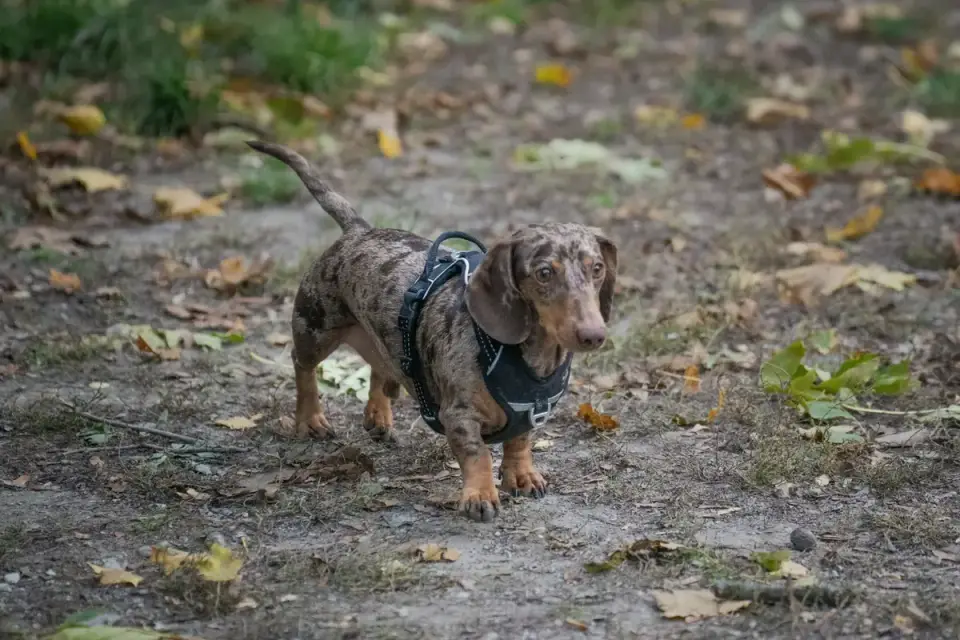
I’ve spent most of my career sitting on the floor with families who are scared of their dog’s own spine. A dachshund’s shape — that long back, those short legs — is the thing everyone loves about the breed, and it’s also the thing that puts real, mechanical stress on the discs between each vertebra. Somewhere around a quarter of dachshunds will have a clinically significant intervertebral disc episode in their lifetime. That number tends to land hard in a first appointment, and it’s why so many owners immediately ban the couch, the bed, and the stairs the same week they hear it.
Why This Breed’s Back Behaves Differently
Dachshunds are chondrodystrophic, meaning the genes that give them their short legs also change how their disc cartilage ages. Discs that would stay pliable in a longer-legged breed calcify early in a dachshund, sometimes well before middle age, and a calcified disc is more brittle and more likely to rupture or herniate under a sudden load. That’s the mechanism behind intervertebral disc disease, or IVDD, and it’s why a hard landing off a bed matters so much more for this breed than for, say, a Labrador.
What the Evidence Actually Shows About Jumping and Stairs
This is where I ask owners to sit with something uncomfortable: the largest lifestyle study on this breed did not find that banning jumping protects the back. The DachsLife 2015 survey looked at thousands of dachshunds and found dogs that were not allowed to jump on and off furniture were over three times more likely to have had an IVDD episode than dogs that were allowed to jump — 26.7% versus 10.4% — according to PMC: DachsLife 2015: an investigation of lifestyle associations with the risk of intervertebral disc disease in Dachshunds. Daily stair use showed a similar, smaller pattern: dogs climbing a flight of stairs every day had a lower IVDD prevalence than dogs kept off stairs entirely.
Before anyone reads that as “let the jumping happen,” the study’s own authors flagged the obvious confound: this is very likely reverse causality. Owners tend to restrict jumping and stairs after a dog is diagnosed with a back problem, not before. A dog that already has early disc disease gets carried more and jumps less, which makes restriction look like the cause of the very problem it was a response to. There’s also a plausible biological piece — dogs that move through a normal range of motion regularly may build stronger paraspinal and core musculature that offers some real, if modest, protection.
So Why Recommend a Ramp at All
Because the goal isn’t zero movement, it’s zero hard, uncontrolled landings. A ramp doesn’t eliminate the climbing or the muscle-building movement pattern; it changes the mechanics of getting up and down. Instead of a six-inch dachshund launching off a 20-inch-high bed and absorbing that drop through a compressed disc space, the same dog walks a graded incline with four paws sharing the load the whole way. That distinction — controlled movement versus uncontrolled impact — is the whole argument for a ramp, and it’s consistent with general guidance from groups like the AKC, which notes ramps as the gentler option for dogs with existing back or joint concerns.
I remember a ten-year-old miniature dachshund named Biscuit, about 11 pounds, whose owners called me because she’d started hesitating at the bottom of their bed every night for close to two weeks. She’d always slept up there. Now she’d pace, whine once, and wait to be lifted, and by the second week she’d also stopped following them down the hallway to the kitchen after dinner, a route she used to trot ahead on. Nothing showed up on exam that morning — no pain on spinal palpation, normal gait on the tile floor — but that hesitation at a known jump-off point, paired with the new reluctance to walk a familiar hallway, was enough for me to recommend a ramp for the bed that same week rather than wait for a clearer sign.
Stairs Aren’t the Enemy — Uncontrolled Ones Are
A set of dog stairs with wide, shallow treads and a non-slip surface is not the same risk as a household staircase. If your dachshund already navigates your home’s real stairs daily and shows no pain, no reluctance, and no stiffness after, the DachsLife data gives you a reasonable, evidence-aware case for leaving that in place rather than carrying her everywhere. Where I get firmer is household stairs that are steep, slick hardwood, or poorly lit — those combine height with an unpredictable landing, and that’s the actual hazard, not stairs as a category. If your dog already struggles on your steps, non-slip stair treads address the traction half of that problem directly, and they’re a cheaper first step than replacing the whole staircase setup.
Building the Setup That Actually Fits Your Dog
Here’s how I’d walk a family through it, room by room. Identify every surface your dog jumps on or off now — bed, couch, car seat — and rank them by height and how often she uses each one. Put a ramp at the tallest, most-used spot first; that’s where a bad landing does the most damage. Choose a ramp with a shallow slope (something closer to a wheelchair ramp’s grade than a playground slide) and a non-slip surface, since a slippery ramp can be worse than no ramp at all. Leave existing, familiar household stairs alone if your dog is already using them without hesitation, pain, or stiffness afterward — don’t manufacture a new restriction where none is needed. Reassess anytime you notice a change: a pause before a jump, a yelp, a hunched back, or reluctance to do something she used to do without a second thought.
What I Watch For Alongside the Equipment
Equipment is only half of what protects this back. Keeping a dachshund lean matters as much as any ramp — extra weight adds direct mechanical load onto discs that are already predisposed to fail early — and for dogs already showing early stiffness, joint-support options are worth discussing with your own vet; our guide on glucosamine for a dog struggling with stairs at night walks through what the evidence actually supports there, and what it doesn’t. None of this is about promising a dog will never herniate a disc. It’s about stacking small, defensible choices — a ramp here, better traction there, a leaner body condition, movement that isn’t restricted for its own sake — in the direction of a spine that’s asked to do less unnecessary work.
Where I Land, and the Counterargument I Take Seriously
The honest counterargument is the one the researchers themselves raised: maybe none of this changes the outcome, and genetics decides which dachshunds herniate a disc regardless of ramps or stairs. I take that seriously. Chondrodystrophy is a real, inherited trait, and no ramp rewrites a dog’s cartilage biology. But quality of life isn’t only about whether an event happens — it’s about how many hard landings a spine absorbs before it does, and how comfortable and confident a dog feels moving through her own house in the meantime. A ramp doesn’t guarantee anything. It does, reliably, remove one category of hard impact from a dog’s day, every single day she uses it.
I think about a fourteen-year-old dachshund I saw for a hospice consult last spring, well past any surgical option, whose family had put in a ramp years earlier after her first mild episode. She still had good days — short walks in the yard, sun naps on the porch — and she still used that ramp every night to reach the foot of their bed on her own, without being lifted. Her family didn’t credit the ramp with preventing everything that had gone wrong along the way. They credited it with the small, daily dignity of getting up there herself. That’s the frame I keep coming back to with families who ask me this question: not whether a ramp prevents IVDD outright, because it doesn’t, but whether it protects the version of comfort and independence your dog still has right now.
If you’re standing in a pet store deciding between a $40 folding ramp and a $60 set of stairs, that’s genuinely a smaller decision than it feels like in the moment. Get the option with a shallow slope and real traction, put it where your dog jumps most, and leave the rest of her normal movement alone unless she tells you otherwise.
Frequently asked questions
Should I stop letting my dachshund jump on the couch entirely?
Not necessarily. Large lifestyle survey data actually found dogs kept off furniture entirely had a higher rate of IVDD than dogs allowed to jump on and off, though the researchers suspect this reflects owners restricting already-affected dogs rather than jumping itself being protective. A ramp at the highest, most-used surface is a reasonable middle path.
Are household stairs dangerous for a dachshund with back problems?
Stairs themselves aren't the main hazard — traction and steepness are. A dachshund already managing real stairs comfortably, without hesitation or stiffness afterward, doesn't necessarily need to be carried everywhere; non-slip treads can address a slick or steep staircase directly.
How do I know if my dachshund's hesitation is early IVDD or something else?
Any new reluctance to jump, a yelp, a hunched back, dragging a paw, or a change in gait warrants an exam rather than a guess. Equipment changes like a ramp are a reasonable first step for prevention, but new symptoms need a veterinarian's eyes.