Thundershirt vs. an Oral Calming Aid for Dog Anxiety: What Actually Changes in the Body
A wrap changes proprioceptive input at the skin; a supplement changes neurotransmitter traffic in the brain.

On this page
The first thing I check when an owner brings me an anxious dog isn’t the dog’s mood. It’s the dog’s gait.
That sounds like a strange place to start with a fear problem, but movement tells me what the nervous system is doing before the dog can. A dog who is bracing against sound — ears pinned, weight shifted back onto the haunches, tail tucked and stiff rather than loose — is showing me a body organized around threat. The muscles around the spine and shoulders are locked in a pattern meant for flight. That’s the biomechanical entry point for a pressure wrap: it doesn’t sedate anything, it changes the sensory information a tense body is receiving. An oral calming aid works a different layer entirely, upstream in brain chemistry rather than downstream at the skin and muscle. Neither is wrong. They’re just not solving the same problem, and conflating them is why owners end up disappointed with whichever one they tried first.
What a wrap is actually doing to a stressed dog’s body
Garment-based calming tools like the ThunderShirt apply constant, even pressure across the torso — the same principle behind swaddling an infant or the deep-pressure vests used in human sensory-processing therapy. The mechanism isn’t mystical: touch receptors in the skin and fascia send a steady stream of proprioceptive input to the brainstem, and that input appears to compete with — or dampen — the sympathetic “go” signal that drives panting, pacing, and vigilance.
The best controlled evidence I can point an owner to is a study on The effect of a pressure wrap (ThunderShirt®) on heart rate and behavior in canines diagnosed with anxiety disorder: ThunderShirt, which randomized 90 dogs diagnosed with separation anxiety or generalized anxiety disorder into three groups: wrap worn per instructions, wrap worn loose (no real pressure), and no wrap at all. Dogs wearing the wrap correctly showed a significantly smaller rise in heart rate from baseline than either the loose-wrap or no-wrap dogs — meaning the pressure itself, not the presence of fabric, was doing the work. A separate open-field trial reached a similar conclusion from a different angle, finding that a pressure vest lowered mean heart rate by roughly 8% and cut overall anxiety scores by about a third during a standardized stress test, alongside less door-orientation and a trend toward less yawning and tongue-flicking — both recognized canine stress markers, as reported in the PMC (National Center for Biotechnology Information): open-field test study.
What that evidence does not show is a wrap resolving the underlying fear response. It’s a tool for the acute moment — the thirty minutes before a storm rolls in, the car ride, the vet-lobby wait — not a treatment that rewires how the dog interprets the trigger long-term.
What an oral calming aid is doing instead
Oral options work at the neurotransmitter level rather than the skin. L-theanine, the amino acid in Anxitane and similar products, is structurally close to glutamic acid and is thought to raise GABA — the brain’s primary inhibitory signal — along with serotonin and dopamine. In an open-label trial of storm-sensitive, client-owned dogs, eighteen dogs completing the protocol showed a statistically significant drop in global anxiety scores from baseline, with treatment success reported for drooling, pacing, hiding, and following behaviors, and 94% owner satisfaction — detailed in the An open-label prospective study of the use of l-theanine (Anxitane) in storm-sensitive client-owned dogs: L-theanine storm-sensitivity study. That’s a real signal, but it’s one open-label trial without a placebo arm, and a broader evidence review is candid that the underlying dataset for L-theanine in dogs remains thin — worth reading in full at SkeptVet’s evidence update before an owner sets expectations too high.
Melatonin sits in a similar evidence tier: commonly recommended by veterinarians for noise phobia specifically, timed thirty minutes to two hours before a predictable trigger like fireworks or a thunderstorm, but the supporting literature leans heavily on case series rather than large randomized trials. I use it, and I recommend it, but I frame it to owners the way I frame every nutraceutical in my practice — as something that may help support a calmer baseline, not a guaranteed fix.
A gait-first way to decide which one to reach for
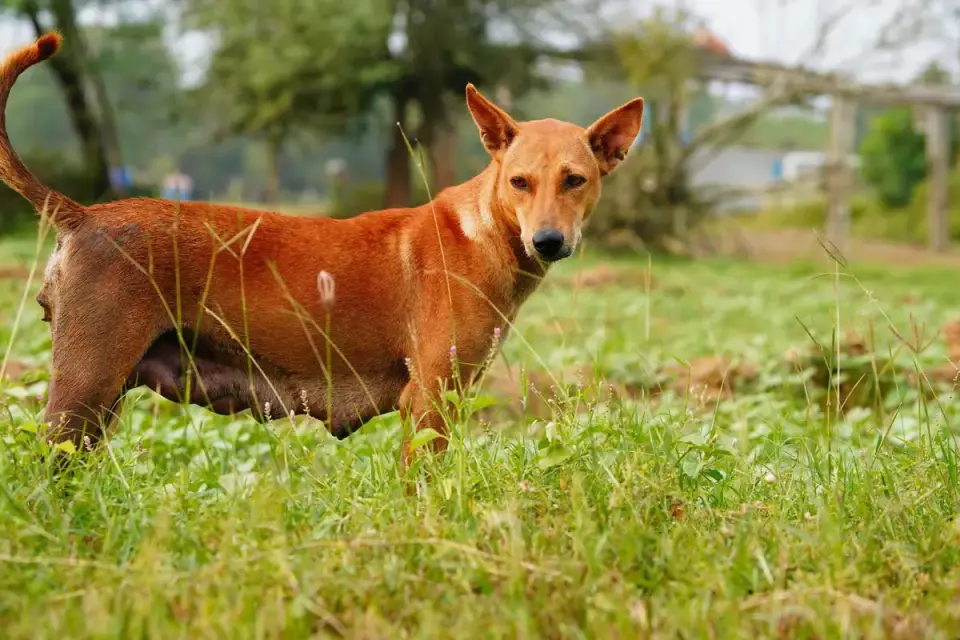
I had a twelve-year-old Border Collie mix, Zephyr, whose owner brought him in after two rough Fourth of July weekends in a row — 68 pounds, arthritic in both hips, and by the owner’s account “fine until the first boom, then he won’t move.” When I watched him during a recorded phone video of an actual episode, what struck me wasn’t panic in the classic sense. It was a dog locking his hind end and refusing to shift weight off his already-sore hips, because bracing felt safer than moving through a body that already hurt. For that dog, a wrap made real sense: it gave his already-guarded posture something to organize around besides pain and startle, and it worked immediately, that same evening. An oral aid alone wouldn’t have touched the mechanical piece of what was happening in his hindquarters. We layered a pressure garment for the acute nights with a vet-guided melatonin dose ahead of forecasted fireworks, and by the following season the owner reported he settled within minutes of the wrap going on, rather than pacing for the better part of an hour.
That case is why I don’t hand owners a single verdict and send them home. A dog whose fear shows up as bracing, freezing, or a stiffened gait is telling you something proprioceptive is driving the picture, and a wrap addresses that layer directly. A dog whose fear shows up as vocalizing, drooling, or restless pacing with no obvious postural guarding is showing you a more purely chemical anxiety state, where an oral aid is doing the more relevant work. Plenty of dogs — like Zephyr — show both, and that’s when I reach for both rather than picking a side.
Where the two tools genuinely overlap, and where they don’t
Cost and pill burden matter here too, and I say that as someone who watches owners weigh both every week. A wrap is a one-time purchase with no ongoing cost and no compliance problem — you either put it on the dog or you don’t, and it works the same the tenth time as the first. An oral calming aid requires the dog to actually eat it, ideally on a consistent schedule ahead of the trigger, which is its own small daily task for an owner already managing an anxious dog. For dogs with food sensitivities or picky palates, that compliance gap is often the deciding factor more than the physiology is.
One more distinction worth naming plainly: neither tool addresses a genuine phobia’s long-term trajectory the way behavior modification, desensitization, or — in more severe cases — a prescribed anxiolytic from a veterinarian can. Both the wrap and the supplement are supportive layers, not the whole plan. If an owner already has a dog on a functional-ingredient supplement plan for calm or gut health, it’s worth reading how strain identity and labeling accuracy shape those products generally, since the same “does the label match the tub” scrutiny applies to calming chews — our team broke that down in Prescription Veterinary Probiotics vs. Over-the-Counter Dog Probiotics: What Actually Differs and in a head-to-head look at two common calming actives in Chamomile vs L-Tryptophan for Calming Dogs.
The practical next step
Start by watching, not guessing. Film thirty seconds of your dog during the next mild trigger — a doorbell, a distant siren, a car passing — and look specifically at the hindquarters and tail carriage, not just the face. A dog who braces, stiffens, or refuses to shift weight is showing you a proprioceptive problem a wrap is built to address; put it on snugly fifteen to twenty minutes before the next predictable trigger and give it a real trial across two or three exposures before judging it. A dog who paces, drools, or vocalizes with a loose, mobile body is showing you a more chemical anxiety state, and that’s the dog I’d start on a vet-discussed oral aid, dosed ahead of the event as the label and your veterinarian direct. If your dog is boarding a flight or a lot of car travel is involved, it’s also worth checking what “airline-approved” actually requires for the carrier itself, covered in What “Airline-Approved” Actually Means for a Dog Carrier — a stressed dog in an ill-fitting crate undoes a lot of the calm you just built. And for dogs already showing both postural bracing and chemical-anxiety signs, don’t treat this as an either/or: run them together, and reassess after a season of real-world triggers rather than a single storm.
Frequently asked questions
Can I use a Thundershirt and an oral calming aid at the same time?
Yes — they act on different systems (skin/proprioception versus brain chemistry), and many dogs with both postural bracing and vocal, restless anxiety do better on the combination than on either alone. Confirm any supplement with your veterinarian first, especially alongside other medications.
How long before a known trigger should I use each one?
A pressure wrap works best put on 15–20 minutes before a predictable trigger, snug across the torso per the product's fit instructions. Oral aids like melatonin are typically dosed 30 minutes to 2 hours ahead, per veterinary guidance, to allow time to take effect.
Does a Thundershirt work for every dog?
No. The controlled trial behind it showed a real heart-rate benefit only when the wrap was worn snugly per instructions — a loose wrap performed no better than no wrap. Some dogs also simply don't tolerate wearing a garment, which is itself useful information about that dog's stress response.
Sources
- The effect of a pressure wrap (ThunderShirt®) on heart rate and behavior in canines diagnosed with anxiety disorder — ScienceDirect / Journal of Veterinary Behavior
- Effect of Wearing a Telemetry Jacket on Behavioral and Physiologic Parameters of Dogs in the Open-Field Test — PMC (National Center for Biotechnology Information)
- An open-label prospective study of the use of l-theanine (Anxitane) in storm-sensitive client-owned dogs — ScienceDirect / Journal of Veterinary Behavior
- Evidence Update: Anxitane (L-theanine) for Anxiety in Dogs (and Cats) — SkeptVet