Why Your Dog Drools Excessively During Thunderstorms
A vet explains why thunderstorm fear triggers heavy drooling in dogs, how to tell stress drool from nausea or dental pain, and what actually helps.
When a dog drools excessively during thunderstorms, that soaked chin usually signals fear, not hunger.
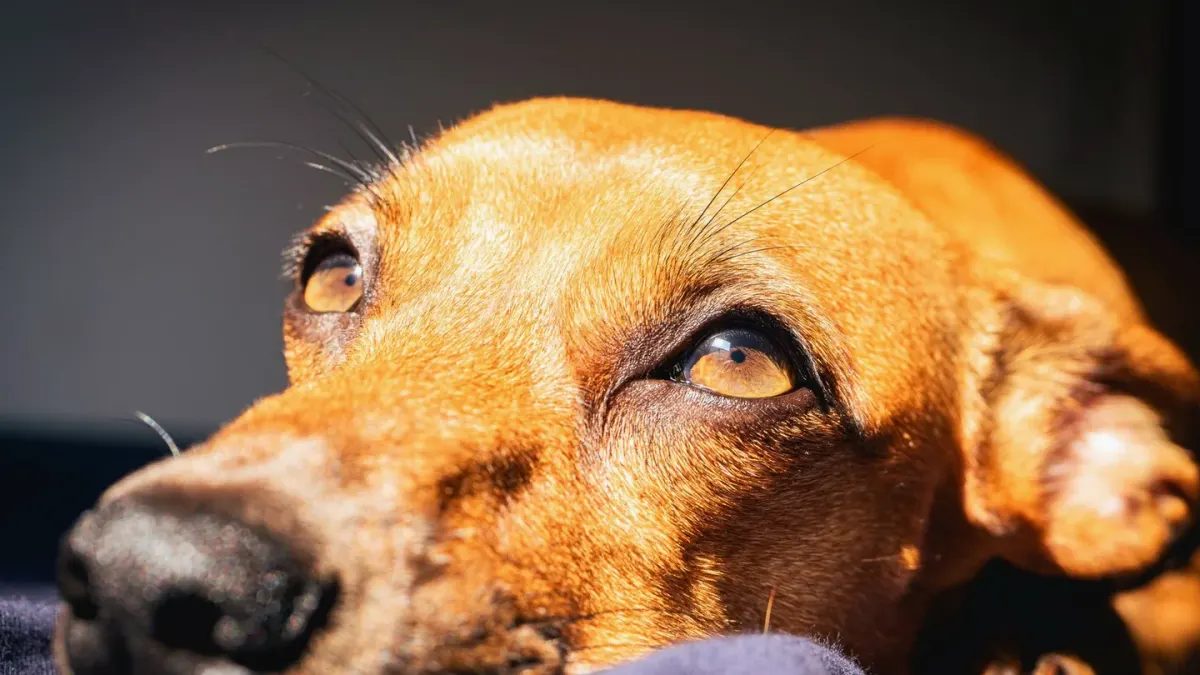
The rain hits the windows at 9 p.m. and Milo, a six-year-old 48-pound Boxer mix, is already pacing from the couch to the hallway. His owner finds a wet trail across the kitchen tile, then a full puddle under his chin as the thunder rolls again. He is panting, licking his lips, yawning wide, ears pinned back. She wonders if he ate something bad, or if this much drool means he needs nausea medicine right now. It is a familiar storm-season moment — messy, worried, loud — and the drool is only one piece of a whole-body fear response.
That puddle tells us about nerves and muscles, not just the mouth. In my rehab and integrative practice, I walk owners through mobility and recovery in structure/function terms, and fear works the same way. The autonomic nervous system shifts toward sympathetic drive, heart rate and respiratory rate climb, jaw and neck muscles tense, swallowing changes rhythm, and saliva pools instead of clearing. Support here may help support maintaining a calmer neuromuscular pattern through the storm, rather than fixing fear in one night.
Why Fear Turns on the Salivary Faucet
Think of drool as output from a circuit, not a choice your dog is making.
Sympathetic arousal primes the body to move — pacing, trembling, trying to escape to the basement or bathtub. At the same time, panting dries the mouth and changes swallowing, lip-licking and yawning move saliva around, and a tight jaw and neck restrict normal clearance. The result is hypersalivation that looks dramatic on hard floors, even when total saliva volume has only modestly increased.
This is where comparison helps. Fear drool usually arrives with panting, restlessness, whining, clinginess, dilated pupils, and shaking, and it tracks the storm timeline. It surges with thunder cracks and eases in quiet gaps. Oral pain drool looks different — pawing at the face, dropping food, bleeding, foul odor, drooling on one side even on calm days. Toxin or nausea drool often brings repeated gulping, retching, vomiting, or sudden lethargy unrelated to noise.
The Structure/Function Pattern I Watch First
I watch breathing, posture, and mouth together. A fearful dog holds tension through the masseters, temporalis, neck, and thoracic inlet, breathes shallow and fast, and swallows less often. Hands-on rehabilitation work focuses on that chain — soft tissue ease around the jaw and neck may help support maintaining normal swallowing mechanics and relaxed resting posture. That language matters. We are supporting regulation, not erasing noise sensitivity.
When Drool Means More Than Thunder Fear
Most thunderstorm drool is benign and self-limiting, but drool deserves a closer look when the pattern breaks.
Last July I talked through a case that did not follow the usual script. A four-year-old 22-pound terrier mix had started drooling heavily during evening storms, and her owner assumed anxiety. By day 10 of storm season, though, she was still drooling thick, ropey saliva the next morning, refusing her chew, pawing at her left cheek, and flinching when her muzzle was touched. The timeline did not reset between storms. That persistence pointed away from pure fear toward a cracked premolar with secondary nausea, and the exam confirmed it. Fear can coexist with dental disease, foreign material, or gastrointestinal upset, and a failed calming routine is often the clue.
Call your veterinarian promptly for drool with vomiting, retching without producing anything, pale gums, collapse, facial swelling, trouble breathing, suspected toxin or medication ingestion, or drool that continues hours after the storm has passed.
What About Calming Ingredients in the Bowl?
Food and supplement labels love the word calming, so flip the bag over. Daiyum Bowl rule every time — read the guaranteed analysis and full ingredient split before the front-of-bag promise. For storm fear, three ingredients come up often, and the evidence differs by species and dose.
Biomedicines published a review noting that “For the remaining species, evidence is derived mainly from preclinical studies or traditional use.” That line fits chamomile well — long traditional use to support relaxation, but limited direct canine trial data for thunderstorm drool. Cureus summarized ashwagandha differently: “A systematic review analyzed multiple RCTs and concluded that ashwagandha has a moderate positive impact on stress reduction and cognitive performance.” Those trials were largely in people, not storm-phobic dogs, so I treat it as interesting, not decisive. L-theanine, an amino acid found in tea, has an even narrower signal — one review flagged “Nature: except for one study on psychotic anxiety (SMD = 0.54; 400 mg/day for 8 weeks)” — a human dose that does not translate to a chew for dogs.
My position: prioritize behavior and environment first, use a well-made chew only as a supporting layer, and reject any label that implies a treat alone will stop fear drool. The strongest counterargument is convenience — owners want something fast they can give as clouds gather. I still land on routine over rescue because sympathetic arousal learns quickly, and a tasty chew without desensitization can accidentally reward pacing to the pantry.
For a fuller storm plan, see How to Calm a Dog During Thunderstorms: An Integrative Vet’s Layered Approach and use Dog Anxiety Supplements: A Vet’s Checklist Before You Buy the Chew before adding anything new. If you are comparing single ingredients, Chamomile vs L-Tryptophan for Calming Dogs: Which Actually Works? walks through the label math.
Building a Drier, Quieter Storm Routine
Three weeks in is where I see change stick. One owner of an eight-year-old 65-pound Labrador started closing blinds, running a box fan and low music, and settling him on a familiar mat in an interior hallway before storms, with short, calm departures and returns to avoid making arrivals dramatic. She logged drool spots, panting time, and recovery time after each storm. The mat did not work the first two storms. By the third week, panting eased sooner and the chin puddle shrank to a few strings — not because fear vanished, but because the body had a rehearsed place to downregulate.
Keep the structure simple and repeatable:
- Close blinds and mask sound early, before the first crack
- Offer the safe spot, water, and a chew toy without forcing cuddling or crating
- Keep your voice low and movements slow; reward settled breathing
- After the storm, note duration of drool, panting, hiding, and appetite
- Bring that log plus video to your vet if drool escalates year over year
Pressure wraps, gentle TTouch-style strokes along the neck and shoulders, and slow diaphragmatic breathing beside your dog may help support maintaining relaxed postural tone for some dogs. Others find touch overstimulating when highly aroused. Let the dog choose.
Could this storm season be the one where you measure recovery in minutes, not puddles?
Frequently asked questions
Is excessive drooling during thunderstorms normal?
Light to moderate drool with panting, pacing, and clinginess is common with noise fear and usually stops as the storm passes. Drool with vomiting, facial swelling, trouble breathing, or drool that lasts hours afterward needs veterinary care.
How can I tell fear drool from nausea or dental pain?
Fear drool tracks thunder, comes with panting and restlessness, and eases in quiet gaps. Dental or nausea drool often persists on calm days, with pawing at the face, dropping food, bad odor, gulping, or vomiting.
Will a calming chew stop thunderstorm drooling?
A chew alone rarely stops it. Environment, safe space, sound masking, and desensitization do most of the work; any supplement is only a supporting layer, and evidence in dogs remains limited.
Sources
- Biomedicines Review on Chamomile Evidence Tiers — Biomedicines
- Systematic Review of Ashwagandha for Stress — Cureus
- Review of L-Theanine and Anxiety Outcomes — Nature