Best Puzzle Feeders for Beginner Dogs: A Vet's Guide to Starting Slow
The best puzzle feeders for beginner dogs are the ones that ask the least of a first-timer.
On this page
A twelve-week-old cattle dog mix named Ruth taught me most of what I know about starting a puzzle feeder wrong. Her family had read that food puzzles were good for busy minds, bought the hardest one on the shelf, filled it with kibble, and set it in front of a dog who had never had to work for a meal in her life. Ruth pawed at it twice, walked away, and wouldn’t touch it again for a week. That’s the scene I carry into every conversation about beginner feeders now: the tool wasn’t wrong, the starting difficulty was.
I’ve watched this play out with dozens of families since, and the pattern holds. The dogs who succeed with a first puzzle feeder aren’t the cleverest ones — they’re the ones whose owners picked something almost too easy to start, then let the dog build confidence before adding any real challenge.
What a beginner feeder actually needs to do
A beginner puzzle feeder has one job: reward the dog quickly enough that trying feels worth it. According to the American Veterinary Society of Animal Behavior, owners should set a puzzle to its easiest level for a dog’s first exposure, since the goal early on is building curiosity, not testing it. That guidance changed how I coach new owners — I now tell families to expect the first few sessions to look almost too simple. If a puzzle takes more than a minute or two to empty at the start, it’s usually the wrong one for week one.
That means loosely packed kibble in a wide-mouthed treat ball, a shallow snuffle mat, or a rolling dispenser with big openings — not a multi-chamber puzzle with sliding drawers or lids that require a paw-and-nose sequence. Save those for later.
Why the fastest eaters get the most benefit
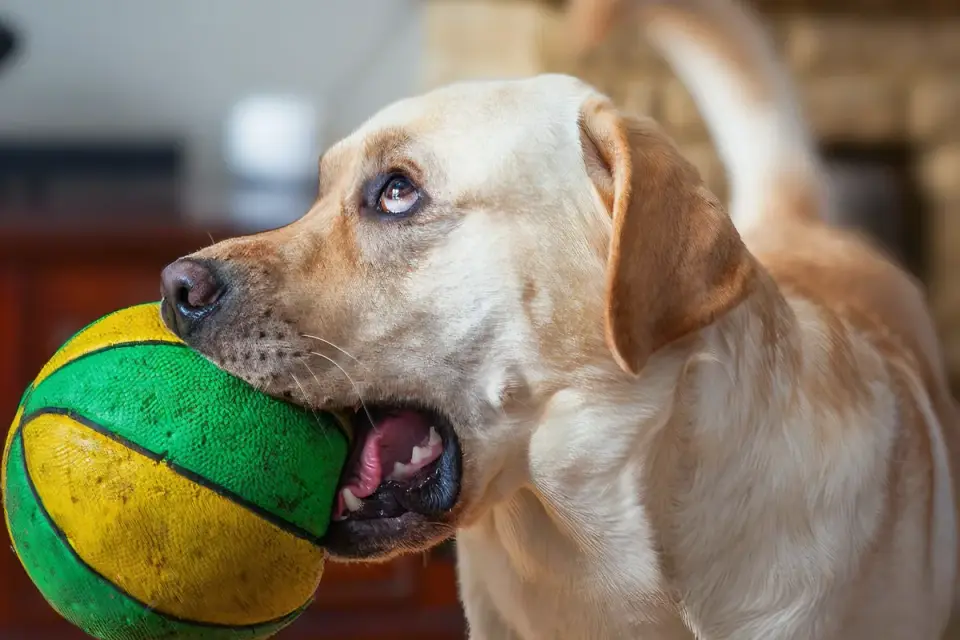
Beginner feeders aren’t only for bored dogs — they’re often most useful for the ones who eat like the bowl is about to be taken away. The VCA Animal Hospitals note that interactive feeders may benefit pets who eat too quickly, get bored when alone, or show signs of separation anxiety, in addition to slowing the pace of a meal itself. That last point matters more than people expect.
Gulping isn’t just a table-manners issue. It’s a physical strain — swallowed air, a stomach that fills fast, a dog who vomits ten minutes after dinner. I’ve had more than one owner describe watching their dog inhale a bowl in under thirty seconds, then pace and drool afterward. A puzzle feeder doesn’t fix that on its own, but it changes the mechanics of the meal enough that many dogs settle.
Not every fast eater is a puzzle-feeder success story, though. Some genuinely anxious dogs get more frustrated, not less, when food is harder to reach — which is the honest counterargument I hear most from trainers I respect. My answer is comfort first: if a dog abandons the puzzle, paces, or starts guarding it, that’s not a dog who needs a harder toy. That’s a dog who needs the difficulty turned back down, or a different feeding tool altogether, like a snuffle mat or a simple slow-feeder bowl instead of a puzzle at all.
Matching material and mess to the dog in front of you
Beginner puzzles come in roughly three material families, and the right one depends on the dog, not the marketing. Rubber and silicone feeders are quiet and forgiving for a dog still building confidence, but a determined chewer can eventually damage soft rubber. Hard plastic dispensers roll and rattle, which some puppies love and some noise-sensitive dogs find genuinely upsetting — I’ve had clients whose dogs wouldn’t go near a plastic roller after one startling clatter on a hard floor. Fabric snuffle-style options are the gentlest introduction of all, since there’s nothing to fear and nothing to defend against; they simply ask a dog to use its nose.
Kibble size and shape matter too. Small-breed kibble falls too easily out of a puzzle built for a Labrador, which turns a food puzzle into a fast bowl again — the opposite of the point. If you’re also weighing a puzzle against a dedicated slow-down tool, it’s worth reading how food-dispensing toys compare with treat balls for eating speed specifically, since the two solve slightly different problems.
Where I land
I think about Ruth’s family again every time I talk a new owner through this. What settled it for them wasn’t a fancier puzzle — it was going back to the easiest setting, letting her win for a week straight, and only then nudging the difficulty up. That’s a comfort-first approach more than a clever-toy approach, and it’s the one I keep coming back to: choose quality-of-life framing over a quick fix. A beginner feeder that a dog abandons in frustration isn’t doing its job, no matter how many reviews call it “engaging.”
If your dog is teething, note that puzzle feeders and frozen enrichment solve different problems at different ages — our guide to frozen toys for teething puppies covers what actually helps a sore mouth versus what risks a cracked tooth. And if evening restlessness, not mealtime, is the real complaint, a puzzle feeder is only part of the answer; see why your dog won’t settle in the evening for the fuller picture.
Brief recap: start easier than feels necessary, watch for frustration rather than pushing through it, match the material to your dog’s temperament and chew strength, and remember that a beginner feeder’s job is to build confidence first — speed and difficulty can come later, or not at all, depending on the dog in front of you.
Frequently asked questions
What's the easiest type of puzzle feeder for a dog that's never used one?
A wide-opening treat ball or a shallow snuffle mat, loosely filled so the food falls or appears easily. The American Veterinary Society of Animal Behavior recommends starting on the easiest setting a puzzle offers, regardless of your dog's age or apparent intelligence.
My dog gave up on the puzzle feeder after a few tries. What now?
Go back to something easier before trying a different puzzle. A dog who walks away is telling you the difficulty outpaced their confidence, not that puzzle feeders aren't for them.
Are puzzle feeders safe for puppies?
Most beginner-level puzzles are fine for puppies once they're eating solid food, but skip anything with small removable parts, and size the openings to your puppy's current kibble.
Sources
- A Guide to Using Food Puzzle Toys with Your Dog — American Veterinary Society of Animal Behavior
- Feeding the Mind and Body: Interactive Feeders for Dogs and Cats — VCA Animal Hospitals