How Researchers Use Owner Surveys in Dog Aging Studies
Owner surveys track how senior dogs eat, move, sleep, and think at home — here's how aging researchers turn those notes into real science.
Researchers use owner surveys to track aging dogs at home where lab tests can't reach.
On this page
The black Lab is eleven, gray around the muzzle, and still first to the kitchen when the refrigerator opens. Her owner started keeping a little notebook on the counter in January: up at 6 or 7, two cups or one and a half, morning walk or just the yard, night waking yes or no. By March she could see it plainly — good mornings had dropped from five walks a week to two, and the dog hesitated three full seconds at the bottom step before climbing. That notebook, messy and ordinary, is exactly what longevity researchers wish they had for every old dog. Food therapy, movement, rest, and mentation braided together, observed where the dog actually lives.
That daily noticing is the data.
Why the kitchen notebook counts as science
A blood panel tells a moment. An owner survey tells a pattern. Researchers studying aging need both, because aging does not happen in a 20-minute exam — it happens over kibble bowls and hallway rugs and 2 a.m. pacing.
Large projects like the Dog Aging Project were built on this idea, enrolling tens of thousands of companion dogs and asking the people who live with them to report diet, activity, environment, behavior, and health history year after year. From a Western view, those answers become structure and function over time: how appetite, mobility, sleep, and cognition hold up. From an Eastern pattern view, they reveal stagnation and deficiency early — the dog who moves stiff after rest but warms out of it, the dog whose Shen looks dimmer at dusk, the dog whose digestive center weakens before weight falls.
No single assay can capture that. A survey can, if it is asked the same way every time.
What those very long questionnaires are really asking
Anyone who has opened one knows the feeling — page after page about stairs and treats and thunder and poop. Exclamatory label aside, flip it over like a guaranteed analysis and the formula is honest!
Researchers are usually hunting four pillars at once: what the dog eats and absorbs, how Qi and blood move through exercise and bodywork and daily play, how rest restores, and how the mind stays engaged. A good aging survey breaks those into observable pieces so different owners mean the same thing by “slowing down.”
Can the dog climb a full flight without stopping. Does she play-bow, even briefly. How many nights in the past week did she wake and pace. Does she sometimes stare at the hinge side of a door. How is Tui-na-style touch received now — lean-in, neutral, or flinch.
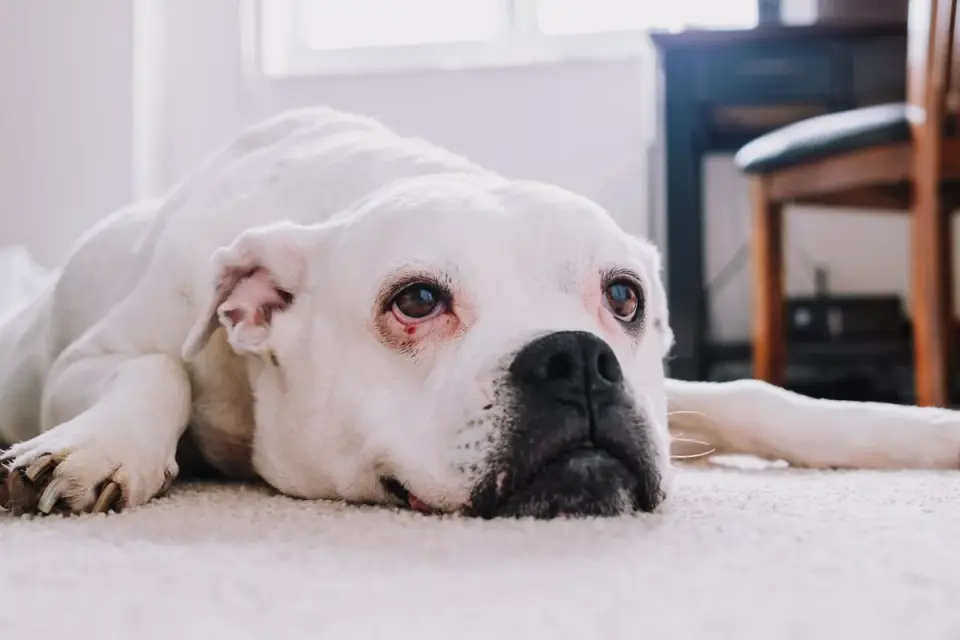
A wiry terrier mix who once shadowed his owner room to room tells the tradeoff story well. When the first long survey arrived, she rushed it after dinner, checking “normal” down the column because admitting change felt disloyal. That winter the scale told another story, with body weight slipping from 22 to 19 pounds despite the same scoop, and the hind legs scuffing on the kitchen tile she used to sprint across. Vets often see this gap between love and logging — the rushed form hides the early slide that food adjustments, acupuncture support for stiffness, gentle hind-end strengthening, and herbal support for digestion may help support long before crisis. The failed form was not dishonest, just too fast to be useful.
Precision matters more than optimism here. “Good” means nothing across 30,000 dogs. “Needs a sling for three stairs” means everything.
Where owner eyes beat bloodwork — and where they don’t
Owner reports win on function. Researchers cannot watch a dog hesitate at the curb, circle before lying down, or lose interest in sniff walks. Owners can, and validated checklists for mobility and canine cognitive change depend on it. That is why similar owner-reported follow-up anchors work like the Morris Animal Foundation lifetime cohorts, where yearly owner updates let patterns emerge across years, not visits.
Bloodwork and veterinary exams win on cause. An owner can report drinking more and urinating more; only labs sort kidney, liver, diabetes, or medication effect. An owner can report hind-end weakness; only an exam sorts painful arthritis from neurologic disconnection. For that sorting, it helps to learn how back-leg weakness timelines unfold and how neurologists separate pain from disconnection.
My integrative bias is plain: track all four pillars together — acupuncture and movement for flow, Chinese herbs where pattern fits, food therapy as the daily foundation, and Tui-na and handling for comfort and connection — and let the survey hold them in one plan. The best reason to choose differently is tempting, to chase one shiny cellular ingredient or one joint chew alone. I still land on the whole-dog log, because single-ingredient fixes fade when sleep, meals, and movement are not measured alongside. Supplements may help support normal cellular health and vitality, but without the home record no one knows if they did.
How to fill one out like a researcher is reading
At 200 yards into their usual evening loop, the leash goes slack in a new way. The red cattle-dog mix, once pulling toward the creek, now plants her feet at the same cracked sidewalk square and looks back, and the owner has learned to turn early rather than coax her the full half-mile. When the annual survey asks about exercise intolerance, she does not write “slower” — she writes that distance marker, plus the two rest stops added since October and the one skipped morning walk per week. That specificity bends the usual advice to “walk more” into “walk smarter,” with shorter sniff loops, warm-up massage down the hind limbs, and a dinner adjusted for lighter work that may help support healthy digestion and steady energy.
Answer for the dog in front of you this week, not the dog of last year. Count. Measure. Date it. Note food by cups and toppers, movement by minutes and surfaces, sleep by wake-ups, mind by new quirks. Note what changed after a diet tweak or a routine shift, including what did not change.
And link it to care. Bring the survey notes to the senior visit, alongside questions about a steady daily routine for vitality and whether muscle support is really about food and movement first. Researchers use the crowd; your veterinarian uses your dog.
The verdict researchers keep returning to is simple and earned: the owner who writes it down sees decline months earlier, intervenes gentler, and gives science something a freezer full of serum never could — a life, lived at home, measured with love and a pencil.
Sources
- The Dog Aging Project — Dog Aging Project
- Morris Animal Foundation — Morris Animal Foundation